








Golf is one of those games where small details make a huge difference. Among these details, swing speed stands out as one of the most important. Think of it like the heartbeat of your game—it dictates how far the ball travels, what clubs you should use, and even what type of golf ball suits you best. But here’s the tricky part: most people don’t really know their swing speed or how to use it to improve their performance.
That’s where a swing speed chart comes into play. It’s like a roadmap that helps you understand how your speed compares to others and how you can use that knowledge to play smarter. Whether you’re a beginner who just picked up a club, an intermediate golfer trying to shave strokes off your game, or a seasoned player fine-tuning for precision, this guide will walk you through everything you need to know.
What Exactly is Swing Speed?
Swing speed is the measurement of how fast the clubhead is traveling when it strikes the ball.
Swing speed is usually measured in miles per hour (mph), and it can vary based on your strength, technique, and even flexibility.
Why Swing Speed Matters
You might be wondering: Is swing speed really that important? Absolutely!
-
Distance Control: Higher speeds usually mean longer drives.
-
-
Ball Selection: Golf balls are designed differently for slower or faster speeds.
-
Consistency: Knowing your speed helps you play smarter rather than harder.
Without understanding your swing speed, it’s like trying to cook without knowing the temperature of your oven—results can be unpredictable.
Average Swing Speeds by Player Level
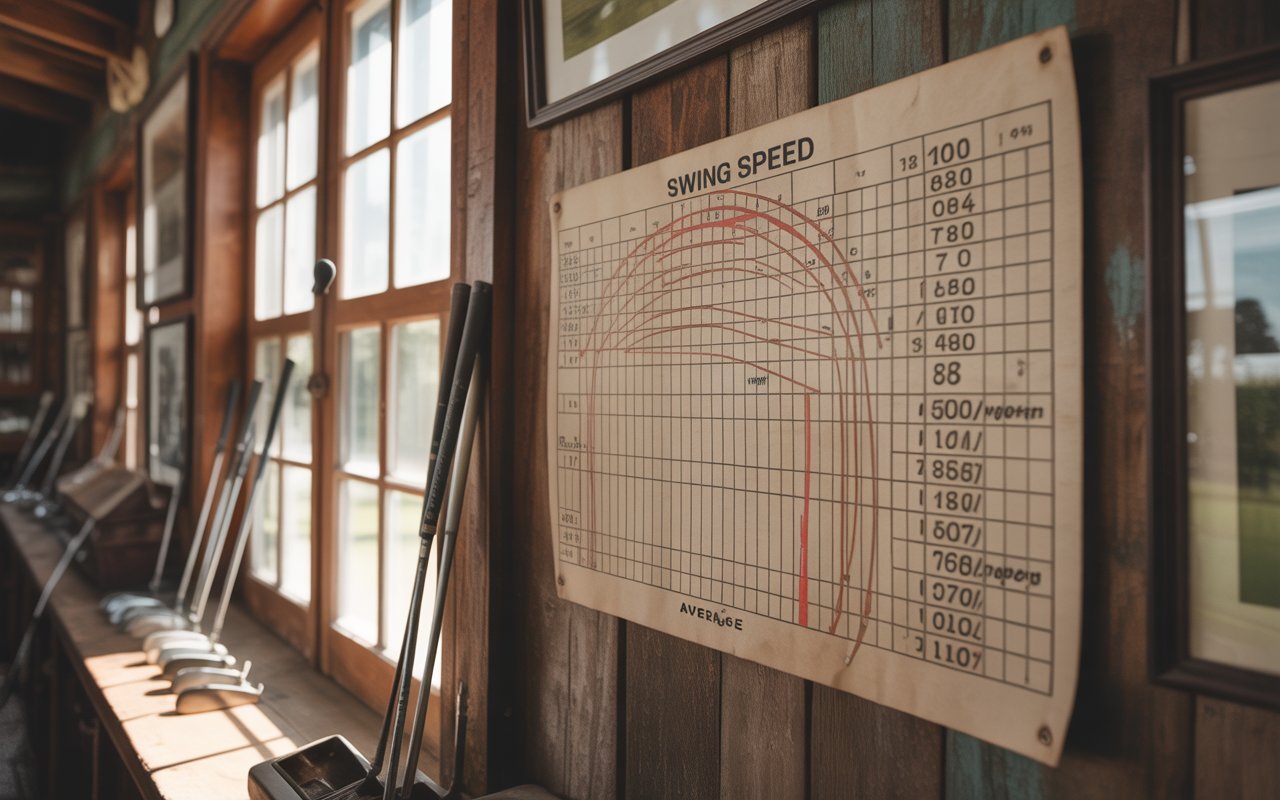
Swing speeds can vary widely between golfers. A chart helps put those numbers into perspective.
Here’s a general breakdown:
-
Beginner golfers: 60–85 mph
-
Recreational players: 85–100 mph
-
Low-handicap amateurs: 100–115 mph
-
Tour professionals: 115–130+ mph
Most everyday golfers fall into the 85–95 mph range, which explains why hitting a 300-yard drive is more of a dream than reality for many.
Swing Speed Chart by Club Type
Different clubs naturally generate different swing speeds. Your driver will almost always be the fastest, while your wedges are typically slower.
| Club | Average Swing Speed (mph) | Average Distance (yards) |
|---|---|---|
| Driver | 85–105 | 200–260 |
| 3-Wood | 80–100 | 180–240 |
| 5-Iron | 70–90 | 150–200 |
| 7-Iron | 65–85 | 130–170 |
| Pitching Wedge | 50–75 | 90–130 |
This table is a good reminder that distance is not everything. Precision and control matter just as much as power in golf.
Men vs. Women vs. Seniors
Swing speeds often vary naturally with factors like age and gender. On average:
-
Male golfers: 90–100 mph with a driver.
-
Female golfers: 65–75 mph with a driver.
-
Senior golfers: Often 70–80 mph due to reduced flexibility.
These are averages, not rules. Some women outdrive men, and plenty of seniors maintain impressive speed through fitness and good technique.
How to Measure Your Swing Speed
Ever catch yourself asking, “What’s my actual swing speed?”—there are several ways to measure it.
-
Launch Monitors: Tools such as TrackMan or FlightScope deliver highly accurate swing speed readings.
-
Swing Speed Radars: Portable gadgets that measure only speed.
-
Club Fitting Centers: Many golf stores and pros have the tools to measure speed during a fitting session.
-
Estimation: Compare your driving distance to chart averages for a rough idea.
For accuracy, nothing beats a launch monitor—it’s like an MRI for your golf swing.
Factors That Influence Swing Speed
Your speed isn’t fixed—it can change based on several factors:
-
Strength and Fitness: Stronger core and legs generate more power.
-
Flexibility: A greater range of motion creates faster acceleration.
-
Swing Technique: Efficiency often beats brute force.
-
Club Weight and Shaft Flex: Lighter clubs and proper flex can boost speed.
It’s a bit like driving a car—the engine (your body), fuel efficiency (technique), and tires (equipment) all contribute to how fast and smooth you go.
How Swing Speed Impacts Shaft Flex
Choosing the right shaft flex is one of the most direct benefits of knowing your swing speed.
-
Below 80 mph → Best suited for Ladies (L) or Senior (A) flex shafts.
-
80–95 mph → Regular (R) flex
-
95–110 mph → Stiff (S) flex
-
110+ mph → Extra Stiff (X) flex
The wrong shaft can feel like running in shoes that don’t fit—it throws off your rhythm and results.
Matching Golf Balls to Swing Speed

Believe it or not, golf balls aren’t one-size-fits-all.
-
Swing speeds under 90 mph: Low-compression balls are ideal for squeezing out extra distance.
-
Faster speeds (90+ mph): High-compression balls provide more control and spin.
Think of it like tennis rackets—different tensions suit different playing styles.
Can You Improve Swing Speed?
Absolutely. While genetics and age play a role, you can increase your swing speed with the right approach:
-
Strength training: Focus on core, hips, and shoulders.
-
Flexibility exercises: Yoga or dynamic stretching.
-
Swing drills: Weighted clubs and speed sticks.
-
Proper mechanics: Lessons from a golf coach can make a huge difference.
Even a small increase of 3–5 mph can add 10–15 extra yards off the tee.
Swing Speed vs. Control: Finding Balance
Here’s the catch: faster isn’t always better. If speed comes at the expense of accuracy, it can hurt your game.
Think of it like driving—yes, you can go 120 mph, but can you keep the car safely on the road? In golf, a controlled swing at 90 mph might serve you better than a wild 110 mph swing.
Using Swing Speed Charts to Your Advantage
Swing speed charts aren’t just numbers on a page. They’re tools you can use to:
-
Compare your game to averages.
-
Select the right clubs and shafts.
-
Pick golf balls suited to your style.
-
Set realistic goals for improvement.
It’s like having a compass in the middle of a forest—it points you in the right direction, but you still need skill and practice to reach your destination.
FAQs
1. What is a good swing speed for the average golfer?
Most recreational golfers have a driver swing speed between 85–95 mph, which is perfectly fine for consistent play.
2. What are the best ways to check my swing speed at home?
You can use portable swing speed radar devices or even some smartphone apps paired with sensors. For accuracy, a launch monitor is best.
3. Does increasing swing speed always add more distance?
Usually, yes—but only if you maintain proper technique and hit the ball cleanly. Otherwise, extra speed might lead to mis-hits.
4. Can seniors increase their swing speed?
Yes! Through stretching, light strength training, and proper technique, many seniors can regain or even boost their swing speed.
5. What’s more important: swing speed or accuracy?
Accuracy. While speed helps with distance, accuracy ensures lower scores and more enjoyable rounds.
Conclusion
Swing speed is more than just a statistic—it’s a window into your golfing potential. By understanding how fast you swing, you can choose better equipment, improve your performance, and even enjoy the game more. A swing speed chart doesn’t just tell you where you stand; it shows you where you can go.
So, the next time you step onto the tee, ask yourself: Am I swinging smart, or just swinging hard?