






Understanding the Unique Climate of Savannah
Savannah, Georgia, is a city where weather feels less like a background detail and more like a defining character. If you’ve ever stepped into this coastal Southern destination, you already know that the atmosphere wraps around you instantly, almost like a warm embrace. The city sits along the Atlantic coast, which means its climate is deeply influenced by ocean currents, coastal breezes, and a subtropical environment that shapes every season in a distinctive way. Unlike inland cities that experience more dramatic seasonal swings, savannah weather maintains a relatively steady rhythm, where warmth and moisture play leading roles throughout most of the year.
What makes Savannah’s weather particularly fascinating is how it blends natural elements into a consistent experience of heat and humidity. Summers are long, stretching from late spring into early fall, while winters are short and mild, rarely dipping into truly cold temperatures. This creates an environment where greenery thrives, Spanish moss hangs heavily from ancient oak trees, and the air often feels thick with moisture. It’s not just about temperature—it’s about how the air feels against your skin, how the breeze carries the scent of the ocean, and how the climate shapes daily life in subtle but noticeable ways.
Visitors often underestimate how impactful humidity can be. It’s one thing to read about high temperatures, but quite another to feel the weight of moisture in the air. Yet, for many, this is part of Savannah’s charm. The weather contributes to the city’s slow, relaxed pace, encouraging people to move a little slower, sip cold drinks on shaded porches, and embrace the rhythm of Southern living.
Summer in Savannah: When Heat Meets Humidity
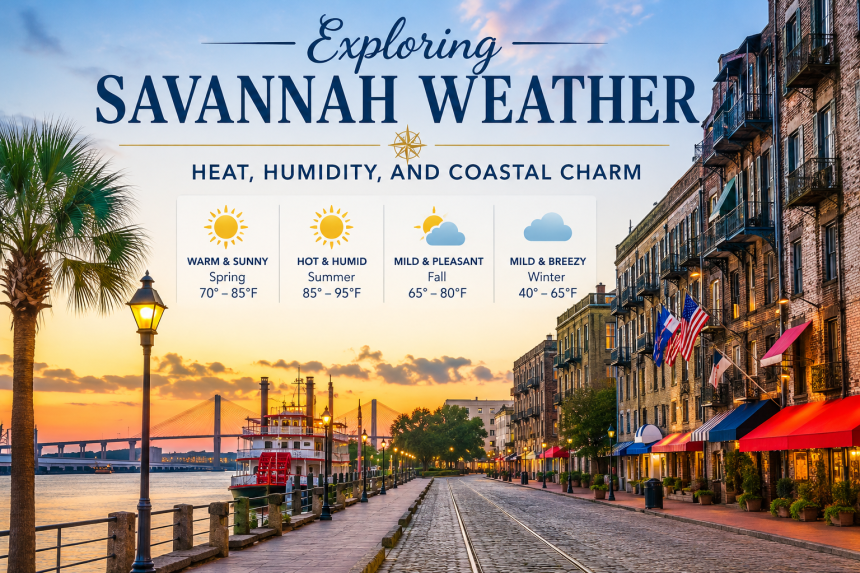
Summer in Savannah is not just hot—it’s intensely humid, creating an experience that feels almost tropical. Temperatures often climb into the high 80s and 90s Fahrenheit, but the humidity makes it feel even warmer. The heat index frequently pushes perceived temperatures higher, turning a simple walk into a full-body experience where the air itself feels heavy. This combination can be overwhelming for newcomers, but locals have adapted their routines to work with the climate rather than against it.
Afternoons during the summer often bring sudden thunderstorms, which are both a relief and a spectacle. These storms roll in quickly, delivering heavy rain, flashes of lightning, and the occasional rumble of thunder before disappearing just as fast as they arrived. While they may disrupt outdoor plans, they also cool the air temporarily and add a dramatic flair to the sky. The rain nourishes the lush vegetation that defines Savannah’s landscape, keeping the city vibrant and green even in the peak of summer.
Despite the heat, summer is a lively time in Savannah. Festivals, waterfront activities, and evening strolls continue as usual, with many events shifting to later hours when temperatures drop slightly. Locals often rely on shaded parks, air-conditioned spaces, and refreshing drinks to stay comfortable. The key to enjoying Savannah in summer lies in embracing the climate rather than resisting it—light clothing, hydration, and a flexible schedule can transform the experience from exhausting to enjoyable.
Fall Transitions: A Gentle Cooling with Coastal Influence
As summer fades into fall, Savannah undergoes a subtle yet noticeable transformation. The oppressive heat begins to ease, and humidity gradually decreases, creating a more comfortable atmosphere for both residents and visitors. Temperatures typically settle into the 70s and 80s, offering a pleasant balance that feels like a reward after the intense summer months. The change isn’t abrupt; instead, it unfolds slowly, allowing the city to maintain its lush appearance while becoming more inviting for outdoor exploration.
One of the most appealing aspects of fall in Savannah is the extended warmth. Unlike northern regions where temperatures drop sharply, Savannah enjoys a prolonged period of mild weather. This makes it an ideal time for walking tours, riverfront visits, and exploring historic districts without the burden of extreme heat. The coastal location continues to play a role, as ocean breezes provide a gentle cooling effect that enhances the overall comfort of the season.
Fall also brings a shift in the city’s atmosphere. The air feels lighter, the pace becomes slightly more energetic, and outdoor events flourish. From cultural festivals to seasonal markets, Savannah comes alive in a different way during this time. The weather supports longer days spent outside, whether you’re strolling beneath moss-draped trees or enjoying a meal at an open-air café. It’s a season that highlights the city’s charm while offering a more relaxed climate.
Winter in Savannah: Mild, Breezy, and Inviting
Winter in Savannah is a far cry from the harsh conditions experienced in many other parts of the United States. Temperatures rarely fall below freezing, and snowfall is extremely rare, making the season feel more like a mild extension of fall rather than a true winter. Daytime highs often remain in the 50s and 60s, providing a comfortable environment for outdoor activities without the need for heavy winter gear.
The coastal influence becomes particularly noticeable during winter, as breezes from the Atlantic Ocean add a crispness to the air. While it may feel cooler, the absence of intense humidity makes the weather refreshing rather than oppressive. This is a time when Savannah’s historic beauty truly shines, as the cooler temperatures encourage exploration without the discomfort of heat or sweat. Walking through the city’s squares, visiting landmarks, and enjoying waterfront views become even more enjoyable.
Winter also offers a quieter, more relaxed atmosphere. Tourist crowds tend to thin out, allowing for a more intimate experience of the city. Holiday decorations, seasonal events, and mild weather combine to create a unique charm that sets Savannah apart from typical winter destinations. It’s a season that invites you to slow down, appreciate the surroundings, and enjoy the city’s character in a more peaceful setting.
Spring Awakening: Bloom, Warmth, and Rising Humidity

Spring in Savannah feels like a gradual awakening, where the city transitions from mild winter conditions to the vibrant energy of summer. Temperatures begin to rise, often reaching the 70s and 80s, while humidity starts to return, hinting at the warmer months ahead. This season is marked by blooming flowers, lush greenery, and a renewed sense of life that permeates every corner of the city.
One of the most striking features of spring is the visual transformation. Gardens burst into color, trees regain their fullness, and the iconic Spanish moss appears even more pronounced against the fresh greenery. The weather supports outdoor activities, making it a popular time for visitors who want to experience Savannah at its most picturesque. The balance between warmth and comfort creates an ideal environment for exploring parks, historic sites, and coastal areas.
However, spring also signals the gradual return of humidity. While it’s not as intense as summer, the moisture in the air becomes more noticeable as the season progresses. This transition serves as a reminder of what’s to come, preparing both residents and visitors for the hotter months ahead. Still, spring remains one of the most enjoyable times to experience Savannah, offering a blend of beauty, comfort, and anticipation.
The Role of Humidity: More Than Just a Number
Humidity in Savannah is not just a statistic on a weather report—it’s a defining element of the city’s climate. It influences how temperatures are perceived, how people dress, and even how buildings are designed. High humidity levels can make the air feel warmer than it actually is, creating a sensation that can be both challenging and unique. It’s the reason why a 90-degree day in Savannah can feel significantly hotter than the same temperature in a drier region.
This moisture-rich environment also contributes to the city’s lush landscape. Plants thrive in the humid conditions, resulting in dense greenery, vibrant flowers, and the iconic moss-covered trees that give Savannah its distinctive look. The humidity supports a thriving ecosystem, making the city feel alive and dynamic throughout the year.
For those unfamiliar with high humidity, adjusting can take time. Simple strategies like staying hydrated, wearing breathable fabrics, and planning activities during cooler parts of the day can make a significant difference. Once you adapt, the humidity becomes less of an obstacle and more of a characteristic that defines the Savannah experience.
Coastal Charm: How the Ocean Shapes the Weather
Savannah’s proximity to the Atlantic Ocean plays a crucial role in shaping its weather patterns. The ocean acts as a natural regulator, moderating temperatures and influencing humidity levels. During the summer, sea breezes can provide brief relief from the heat, while in winter, the ocean helps prevent extreme cold. This balance creates a relatively stable climate that distinguishes Savannah from inland cities.
The coastal environment also contributes to the city’s unique atmosphere. The combination of salt air, gentle breezes, and the sound of nearby waves adds a sensory dimension to the weather. It’s not just about temperature or humidity—it’s about how the environment feels and how it enhances the overall experience of being in Savannah.
Living or visiting near the coast means being aware of occasional weather events, such as tropical storms or hurricanes. While these are not constant occurrences, they are part of the region’s climate and require preparation and awareness. Despite this, the benefits of coastal living—moderate temperatures, scenic beauty, and a distinctive atmosphere—far outweigh the occasional challenges.
Conclusion: Embracing Savannah’s Weather Identity

Savannah’s weather is more than just a set of seasonal patterns; it’s an integral part of the city’s identity. The combination of heat, humidity, and coastal influence creates an environment that is both challenging and captivating. Each season offers a different perspective, from the intense warmth of summer to the mild comfort of winter, all tied together by a consistent sense of Southern charm.
Understanding and embracing this climate is key to fully appreciating what Savannah has to offer. Whether you’re strolling through historic streets, relaxing by the waterfront, or simply enjoying the shade of an oak tree, the weather plays a role in shaping every moment. It encourages a slower pace, a deeper connection to the surroundings, and an appreciation for the unique blend of natural elements that define the city.
FAQs
1. What is the hottest month in Savannah?
July is typically the hottest month, with high temperatures and intense humidity making it feel even warmer.
2. Does Savannah experience hurricanes?
Yes, Savannah can be affected by hurricanes or tropical storms, especially during the Atlantic hurricane season from June to November.
3. Is winter cold in Savannah?
Winter is mild, with temperatures rarely dropping below freezing and very little chance of snow.
4. When is the best time to visit Savannah?
Spring and fall are considered the best times due to comfortable temperatures and lower humidity.
5. How can visitors handle the humidity?
Staying hydrated, wearing light clothing, and planning activities during cooler parts of the day can help manage the humidity effectively.