






If you’ve noticed your phone lighting up more often with “Potential Spam” or “Unknown Caller,” you’re not alone. Over the past few years—and especially heading into 2026—spam calls have surged globally, affecting millions of people daily. What was once an occasional annoyance has now become a persistent disruption, interrupting work, family time, and even sleep.
The rise of spam calls isn’t random. It’s the result of evolving technology, data leaks, and increasingly sophisticated tactics used by scammers. But while the problem has grown, so have the tools and strategies to fight back. Understanding why these calls are happening is the first step toward regaining control of your phone.
Why Spam Calls Are Increasing Rapidly
Spam calls have become more common because they are incredibly cheap and easy to execute. Modern robocalling systems allow scammers to make thousands—even millions—of calls per day using automated software. Unlike traditional scams that required human effort, these systems can operate at scale with minimal cost.
Another major reason is the explosion of personal data online. Every time you sign up for a service, enter your number on a website, or use an app, your information may be stored, shared, or even sold. Data breaches have also exposed millions of phone numbers, making it easier for scammers to target individuals.
Telecommunication advancements have also played a role. Internet-based calling (VoIP) allows callers to operate from anywhere in the world while appearing as local numbers on your phone. This makes it harder to identify suspicious calls and increases the chances that you’ll answer.
In short, spam calling has become a low-risk, high-reward operation for scammers.
What “Potential Spam” Really Means
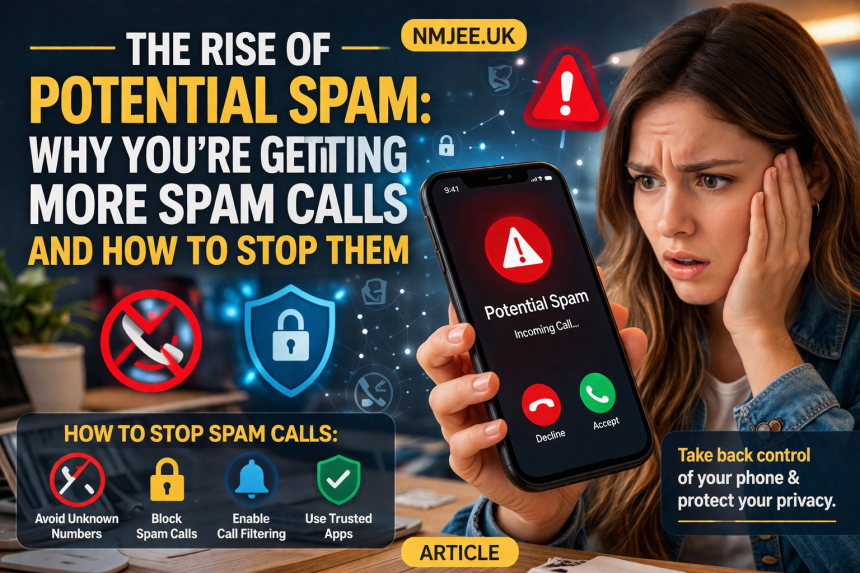
When your phone displays “Potential Spam,” it’s not just a random label—it’s a warning generated by your carrier or smartphone software. These systems analyze incoming calls using databases of known spam numbers, user reports, and behavioral patterns.
For example, if a number has been reported multiple times for suspicious activity, it may automatically be flagged. Similarly, numbers that make a high volume of calls in a short period are often marked as spam.
While this feature is helpful, it’s not perfect. Some legitimate calls may occasionally be flagged, and some spam calls can still slip through. However, it provides an important first line of defense against unwanted interruptions.
The Psychology Behind Spam Calls

Spam calls are not just about technology—they rely heavily on human psychology. Scammers design their tactics to trigger emotions like fear, urgency, or curiosity.
You might receive a call claiming your bank account has been compromised, your package is delayed, or you’ve won a prize. These scenarios are crafted to push you into acting quickly without thinking critically.
Another common tactic is persistence. Even if only a small percentage of people respond, the sheer volume of calls ensures that scammers still profit. It’s a numbers game, and unfortunately, it works.
Understanding these psychological tricks can help you stay calm and avoid falling into their traps.
Common Types of Spam Calls in 2026
Spam calls have evolved significantly, and today they come in many forms. One of the most common types is robocalls—automated messages that deliver pre-recorded content. These calls often promote fake services, loans, or insurance offers.
Another growing category is impersonation scams. In these cases, callers pretend to represent banks, government agencies, or well-known companies. They may ask for personal information, passwords, or payment details.
There are also “one-ring” scams, where your phone rings briefly and disconnects. If you call back, you may be charged high international fees.
In 2026, AI-generated voice scams have become more sophisticated. Some scammers can mimic real voices, making their calls sound more convincing than ever before.
How Your Number Ends Up on Spam Lists
Many people wonder how scammers get their phone numbers in the first place. The answer often lies in everyday online activity.
Signing up for services, entering contests, or downloading apps can sometimes lead to your number being shared with third parties. Even legitimate companies may include clauses in their terms allowing data sharing.
Data breaches are another major source. When companies fail to protect user data, hackers can access and sell phone numbers on the dark web.
Additionally, some scammers use number generators to call random combinations until they find active lines. Once they confirm your number is active—especially if you answer or respond—it may be added to a “verified” list and targeted more frequently.
The Role of Technology in Fighting Spam Calls
While technology has enabled spam calls, it is also the key to stopping them. Modern smartphones and carriers now offer built-in spam detection features that automatically filter suspicious calls.
Call-blocking apps have also become more advanced. These apps use large databases and machine learning to identify and block spam numbers in real time.
Some telecom providers have implemented authentication systems that verify whether a call is coming from a legitimate source. This helps reduce the effectiveness of caller ID spoofing.
Despite these advancements, no system is foolproof. That’s why combining technology with personal awareness is essential.
Practical Steps to Reduce Spam Calls
Reducing spam calls requires a proactive approach. One of the simplest steps is to avoid answering calls from unknown numbers. If the call is important, the caller will likely leave a voicemail.

Blocking suspicious numbers is another effective strategy. Most potential smartphones allow you to block numbers with just a few taps, preventing repeat calls.
Registering your number with a “Do Not Call” list can also help, although it may not stop all spam, especially from international sources.
It’s also important to be cautious about sharing your phone number online. Only provide it to trusted services, and review privacy settings whenever possible.
Finally, consider using a dedicated secondary number for online registrations. This can help protect your primary number from being exposed.
What to Do If You Answer a Spam Call
If you accidentally answer a spam call, the most important thing is to stay calm and avoid engaging. Do not provide any personal or financial information, even if the caller sounds convincing.
Hanging up immediately is usually the best option. Engaging with the caller—even to say “stop calling”—can sometimes confirm that your number is active, leading to more calls.
If the call involves threats or suspicious requests, report it to your local authorities or telecom provider. Reporting helps improve spam detection systems and protects others from similar scams.
The Future of Spam Calls
As technology continues to evolve, so will spam calls. In the coming years, we can expect even more sophisticated tactics, including AI-driven conversations and highly targeted scams.
However, there is also hope. Governments, telecom companies, and tech developers are investing heavily in solutions to combat spam. Improved authentication systems, stricter regulations, and smarter detection tools are all part of the fight.
The battle between scammers and security systems is ongoing, but awareness remains one of the most powerful tools available to individuals.
Final Thoughts: Taking Back Control of Your Phone
Spam calls may feel overwhelming, but they are not unstoppable. By understanding how they work and taking simple precautions, you can significantly reduce their impact on your life.
The rise of “Potential Spam” alerts is actually a sign that technology is adapting to protect users. While the problem hasn’t been solved completely, progress is being made.
Ultimately, staying informed and cautious is the best defense. Your phone is a personal space, and with the right strategies, you can take back control and keep unwanted calls at bay.