







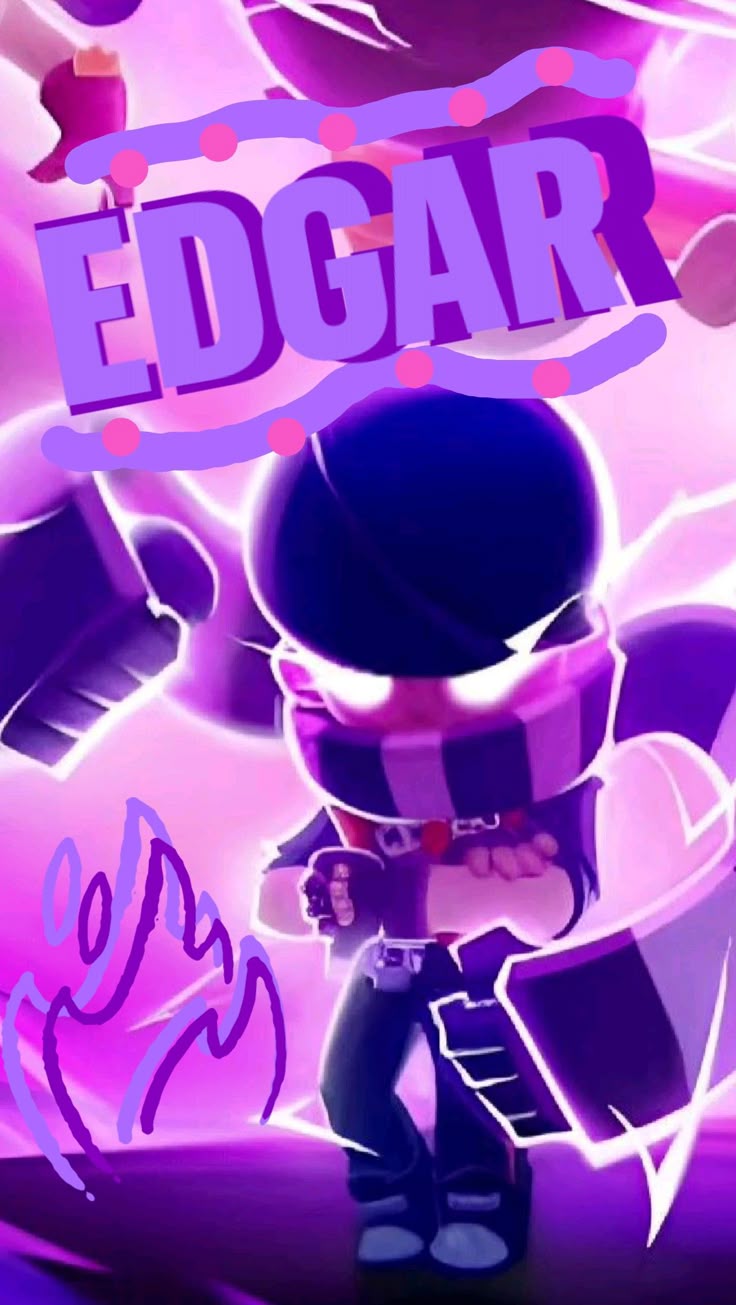
Introduction: Edgar as a Symbol of High-Risk Play
In the fast-paced world of Brawl Stars, few characters spark as much debate as Edgar. Loved by aggressive players and criticized by those who value control and balance, Edgar represents a very specific design philosophy within the game. He is not a brawler meant for slow positioning, defensive zoning, or patient pressure. Instead, Edgar is built around sudden movement, close-range domination, and constant risk-taking. His mechanics push players toward an aggressive mindset, rewarding bold decisions while punishing hesitation or poor timing. Understanding Edgar is not just about knowing his abilities but about recognizing how those abilities shape the way players approach every match.
The Core Design Philosophy Behind Edgar

Edgar was designed as an assassin-style brawler whose entire kit revolves around getting close to enemies as quickly as possible. Unlike long-range brawlers who control space, Edgar thrives in breaking that space and forcing direct confrontations. His short attack range, fast movement, and self-healing punches clearly indicate that he is meant to engage, not retreat. From the moment players unlock Edgar, the game subtly teaches them that success comes from initiative. Waiting too long, playing passively, or relying on teammates often leads to failure when using him.
This design philosophy creates a unique psychological effect. Edgar players are encouraged to think aggressively, scanning the battlefield for weak targets, isolated enemies, or opportunities to dive. The character itself almost demands action, making Edgar one of the most momentum-driven brawlers in edgar brawl stars.
Short Range Attacks and Forced Commitment
One of the most defining aspects of Edgar’s gameplay is his extremely short attack range. Unlike brawlers who can poke enemies from a distance and retreat safely, Edgar must fully commit to every fight. Once he moves in, there is rarely a way out unless he secures a takedown or has his Super available. This lack of range removes the option of passive damage and forces players into direct engagements.
This mechanic shapes aggressive gameplay by eliminating hesitation. Edgar brawl stars players quickly learn that standing at mid-range achieves nothing. To be effective, they must close the gap completely. This leads to a playstyle where positioning, timing, and target selection are critical. A mistimed engagement can result in instant defeat, while a well-chosen attack can quickly turn the tide of a match.
Lifesteal Mechanics and Sustained Aggression
Edgar’s self-healing ability is one of the most important elements of his kit. Each successful punch restores a portion of his health, allowing him to survive longer in close combat than most brawlers. This lifesteal mechanic fundamentally changes how players view fights. Instead of retreating when health drops, Edgar players are often encouraged to push forward, trusting that continued attacks will keep them alive.
This mechanic rewards relentless pressure. As long as Edgar is dealing damage, he remains a threat. However, the moment his attacks stop, his survivability drops sharply. This creates a feedback loop where aggression becomes the safest option. Players are trained to stay on top of enemies, chaining attacks together rather than disengaging. In many cases, Edgar feels strongest when outnumbered but actively punching, highlighting how his mechanics favor constant engagement over cautious play.
The Super Ability: Mobility as a Weapon

Edgar’s Super ability is arguably the single most influential factor in shaping his aggressive gameplay. His leap allows him to instantly close distance, bypass obstacles, and surprise enemies. Unlike movement abilities that are defensive or evasive, Edgar’s Super is almost entirely offensive in nature. It exists to start fights, not escape them.
The psychological impact of this ability is significant. Edgar players often feel empowered to initiate fights that would otherwise seem impossible. The leap creates opportunities for ambushes, sudden eliminations, and momentum swings. However, it also carries immense risk. Using the Super commits Edgar fully to the engagement. If the target survives or receives support, Edgar is often left vulnerable.
Fast Super Charge and Constant Threat Presence
Another mechanic that shapes Edgar’s playstyle is how quickly his Super charges, even without dealing damage. This passive Super charge ensures that Edgar remains a constant threat throughout the match. Enemies are forced to respect his presence, knowing that a jump could happen at any moment.
For Edgar players, this mechanic encourages frequent engagement. Since the Super becomes available quickly, there is less incentive to hold onto it for long periods. Instead, players are rewarded for using it often, maintaining pressure and disrupting enemy positioning. This creates a rhythm where Edgar is almost always looking for the next opportunity to strike, reinforcing his role as an aggressive initiator rather than a reactive defender.
Weaknesses That Reinforce Skill-Based Aggression
Despite his offensive potential, Edgar brawl stars is far from overpowered. His low health pool and reliance on close combat mean that mistakes are punished harshly. Crowd control abilities, knockbacks, and high burst damage can shut him down instantly. These weaknesses prevent Edgar from being a mindless attacker and instead demand calculated aggression.
This balance is crucial. Edgar players must learn when aggression is appropriate and when patience is required. Charging blindly into every fight often leads to repeated losses. Over time, skilled players develop a refined sense of timing, choosing moments when enemies are vulnerable or distracted. In this way, Edgar’s weaknesses actually elevate the quality of aggressive gameplay by rewarding intelligent decision-making rather than reckless behavior.
Edgar’s Brawl Stars Impact on Team Dynamics
Edgar’s brawl stars mechanics do not only affect individual playstyle; they also influence team dynamics. In team-based modes, Edgar often functions as a disruptor or finisher rather than a sustained damage dealer. His role is to eliminate key targets, force enemy repositioning, or capitalize on openings created by teammates.
This encourages coordination, even if indirectly. Edgar players learn to wait for teammates to apply pressure before diving in. At the same time, teammates must understand Edgar’s limitations and avoid relying on him for consistent control. His aggressive nature can either create momentum for the team or leave them temporarily outnumbered if he falls too quickly. This dynamic adds depth to team play and reinforces Edgar’s identity as a high-impact but situational brawler.
How Edgar Shapes Player Behavior and Meta Perception
Beyond mechanics, Edgar has a noticeable effect on player behavior and community perception. His straightforward yet risky playstyle attracts newer players who enjoy fast-paced action, while experienced players often view him as a test of discipline and timing. This divide has made Edgar one of the most talked-about brawlers in the game.
In the meta, Edgar’s presence forces other players to adapt. Teams may choose brawlers with knockback or burst damage specifically to counter him. This ripple effect shows how a single aggressive design can influence broader strategic trends within the game. Edgar does not just exist within the meta; he actively shapes it through the pressure he applies.
The Learning Curve: From Recklessness to Precision

Many players initially struggle with Edgar because his mechanics encourage aggression without immediately teaching restraint. Early experiences often involve frequent defeats due to poor jumps or mistimed attacks. However, as players gain experience, Edgar becomes a tool for learning advanced skills such as positioning, enemy tracking, and cooldown management.
This learning curve is one of Edgar’s greatest strengths as a character. He rewards improvement and punishes stagnation. Players who master Edgar often develop better overall game sense, as his survival depends on reading situations accurately. In this way, Edgar’s aggressive mechanics serve as a training ground for developing sharper instincts and faster decision-making.
Conclusion: Edgar as a Masterclass in Aggressive Design
Edgar stands as a clear example of how character mechanics can shape gameplay philosophy. Every aspect of his design pushes players toward aggression, from his short range and lifesteal to his mobility-focused Super and fast charge rate. At the same time, his vulnerabilities ensure that aggression must be thoughtful rather than reckless.
By forcing commitment, rewarding pressure, and punishing mistakes, Edgar creates a unique and memorable gameplay experience. He is not a brawler for everyone, but for those who embrace his mechanics, Edgar offers a fast, intense, and skill-driven way to experience Brawl Stars. Ultimately, Edgar proves that aggressive gameplay, when carefully designed, can be both challenging and deeply rewarding.