







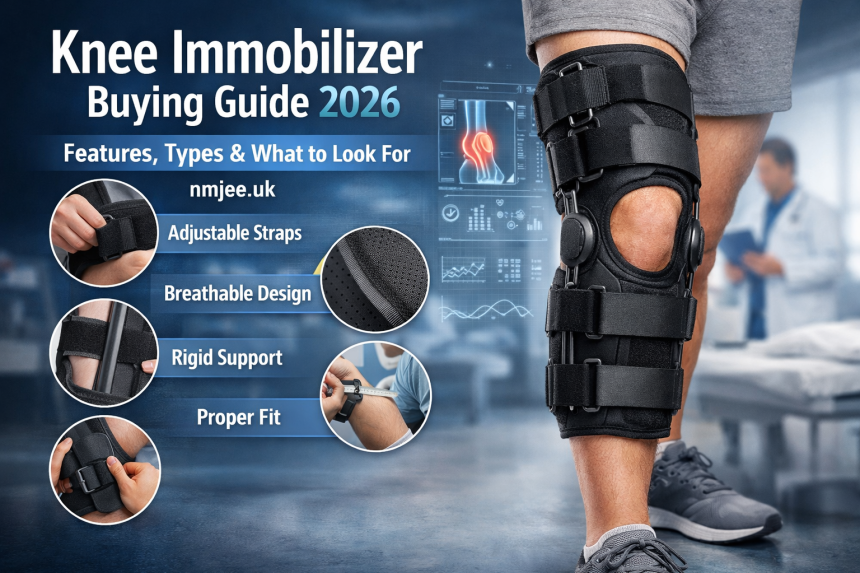
A knee injury can instantly change how you move, work, and live your daily life. Whether it’s a ligament tear, post-surgery recovery, or a sudden trauma, one of the most commonly recommended supports is a knee immobilizer. In 2026, these devices have evolved significantly—offering better comfort, smarter adjustability, and more patient-friendly designs than ever before.
This guide will walk you through everything you need to know before buying a knee immobilizer, including key features, types, and expert tips to help you choose the right one.
Understanding What a Knee Immobilizer Does
A knee immobilizer is a medical brace designed to keep your knee in a straight, stable position. Its main purpose is to limit movement, allowing injured tissues to heal properly.
Unlike flexible knee braces, immobilizers are structured and often include rigid or semi-rigid supports (called stays) that run along the sides and back of the leg. These prevent bending or twisting that could worsen an injury.
They are commonly used for:
- Post-surgery recovery (ACL, knee replacement, etc.)
- Ligament injuries or tears
- Fractures or severe sprains
- Patellar dislocations
- Acute knee pain or instability
By restricting movement, immobilizers reduce strain on the joint and help accelerate healing while also minimizing pain.
Why Knee Immobilizers Matter More in 2026
The modern knee immobilizer is no longer a bulky, uncomfortable device. In 2026, innovations in materials and design have made them more practical and user-friendly.
Newer models focus on:
- Lightweight construction
- Breathable, skin-friendly fabrics
- Adjustable modular designs
- Improved anatomical fit
Some advanced research is even exploring fabric-based orthoses with programmable elasticity, offering support without rigid materials.
This shift means patients can now recover with less discomfort and better mobility management.
Types of Knee Immobilizers

Choosing the right type is essential because not all immobilizers serve the same purpose. Understanding the main categories can help you make an informed decision.
1. Standard Knee Immobilizers
These are the most common and widely used types. They typically feature:
- Foam or padded fabric construction
- Rigid stays on the sides and back
- Multiple Velcro straps
They are ideal for post-surgery recovery and acute injuries, providing maximum immobilization.
2. Adjustable Knee Immobilizers
These models allow you to modify the fit and sometimes the level of restriction.
Key features include:
- Adjustable straps for customized compression
- Removable stays
- Flexible sizing
They are especially useful when swelling changes during recovery, allowing you to adapt without replacing the brace.
3. Long-Length Immobilizers
These extend further up the thigh and down the calf, offering full-leg stabilization.
Best suited for:
- Severe injuries
- Fractures
- Post-operative protection
They provide stronger immobilization compared to shorter designs.
4. Hinged Immobilizer Alternatives
While not strictly immobilizers, hinged braces are often used during later recovery stages.
They:
- Allow limited movement
- Provide stability while regaining mobility
These are typically used after transitioning out of a full immobilizer.
Key Features to Look For in 2026

Not all knee immobilizer are created equal. Here are the most important features to consider before buying.
1. Proper Fit and Sizing
Fit is the most critical factor. A poorly fitted immobilizer can:
- Slip down the leg
- Cause discomfort or skin irritation
- Reduce effectiveness
Measure your thigh, knee, and calf circumference to ensure the correct size. Adjustable models are often a safer choice for first-time buyers.
2. Adjustable Straps and Closures
Look for models with multiple Velcro straps. These allow:
- Even pressure distribution
- Secure positioning
- Easy adjustments throughout the day
Most quality immobilizers include at least 4–5 straps for stability.
3. Rigid or Semi-Rigid Stays
Stays are the backbone of the immobilizer.
High-quality braces include:
- Metal or aluminum stays
- Removable support panels
- Multi-directional stability
These components ensure the knee remains in a fixed position during recovery.
4. Comfort and Padding
Since immobilizers are often worn for long periods, comfort is essential.
Look for:
- Soft foam padding
- Terry cloth or cotton lining
- Skin-friendly materials
A well-padded brace prevents pressure sores and improves overall compliance.
5. Breathability and Ventilation
Modern immobilizers use breathable fabrics to prevent overheating.
Ventilated designs help:
- Reduce sweating
- Prevent skin irritation
- Improve long-term wearability
This is especially important in warm climates.
6. Length and Coverage
Choose the length based on your condition:
- Short: mild injuries
- Medium: moderate support
- Long: full immobilization
Longer braces provide greater stability but may feel heavier.
7. Ease of Use
Recovery can already be challenging, so your brace should be easy to handle.
Look for:
- Wrap-around designs
- Quick-release straps
- Simple application process
Many immobilizers are designed for one-person use, making them convenient for daily wear.
8. Durability and Build Quality
A knee immobilizer should last throughout your recovery.
Check for:
- Strong stitching
- High-quality materials
- Reinforced panels
A durable brace maintains its support level without losing shape over time.
When Should You Use a Knee Immobilizer?
Doctors typically recommend immobilizers in specific situations.
These include:
- Immediately after surgery
- During acute injury phases
- When movement must be completely restricted
However, prolonged use without guidance may lead to stiffness or muscle weakness. Always follow medical advice for duration and usage.

Common Mistakes to Avoid
Buying the wrong knee immobilizer can slow down your recovery. Here are some mistakes to avoid:
Choosing the Wrong Size
A tight brace can restrict circulation, while a loose one won’t provide proper support.
Ignoring Comfort
If a brace is uncomfortable, you’re less likely to wear it consistently.
Overlooking Adjustability
Swelling changes during recovery—your brace should adapt accordingly.
Using It Without Guidance
Always consult a healthcare provider before prolonged use.
How to Ensure a Proper Fit
A properly fitted immobilizer should:
- Stay in place without sliding
- Feel snug but not tight
- Allow two fingers under the straps
Improper fit can lead to numbness, swelling, or reduced effectiveness, so adjustments are essential.
Price Range and Value in 2026
Knee immobilizers are available at various price points:
- Budget models: Basic support and comfort
- Mid-range: Better materials and adjustability
- Premium: Advanced designs and enhanced comfort
While it may be tempting to go for the cheapest option, investing in quality often results in better recovery outcomes.
Future Trends in Knee Immobilizers
The future of knee immobilizers is promising, with innovations focusing on:
- Smart braces with sensors
- Lightweight fabric-based support systems
- Custom-fit 3D-printed designs
These advancements aim to combine immobilization with comfort and mobility tracking, making recovery more efficient.
Final Thoughts
Buying a knee immobilizer in 2026 is no longer just about restricting movement—it’s about balancing support, comfort, and adaptability. With modern advancements, patients now have access to braces that are more comfortable, adjustable, and effective than ever before.
When choosing your immobilizer, focus on the essentials: proper fit, strong support, breathable materials, and ease of use. These factors can significantly impact your recovery experience.
Most importantly, always consult a healthcare professional before making a purchase. The right knee immobilizer, combined with proper medical guidance, can make a meaningful difference in your healing journey—helping you get back on your feet safely and confidently.