







Physics often reveals its beauty through motion, and among the many concepts that describe how objects move, tangential acceleration holds a special place. It is one of those ideas that connects abstract theory with real-world applications, shaping how engineers design machines, how scientists understand motion, and how everyday technology functions. While it may sound complex at first, tangential acceleration is a concept deeply rooted in simple observations of how objects speed up or slow down when moving along a curved path.
Understanding Motion in a Curved Path
To appreciate tangential acceleration, it is important to first understand motion along a curved trajectory. When an object moves in a straight line, its motion is relatively easy to describe. However, when that object follows a circular or curved path, things become more interesting. In such cases, the object’s velocity is constantly changing, even if its speed remains the same, because velocity includes both magnitude and direction.
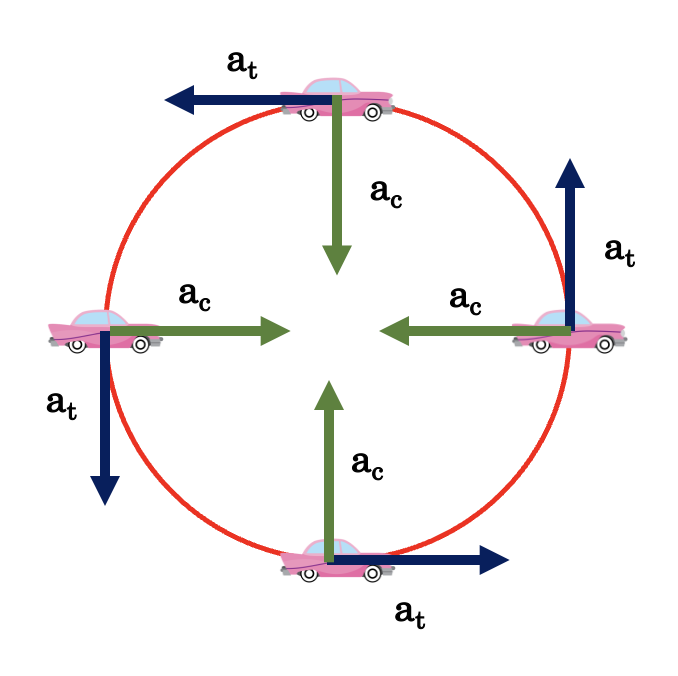
This brings us to the broader idea of acceleration. Acceleration is not just about speeding up or slowing down; it also includes any change in direction. When an object moves along a curve, its acceleration can be divided into two components: one that changes its direction (centripetal acceleration) and another that changes its speed (tangential acceleration). The latter is what we focus on here.
What Is Tangential Acceleration?
Tangential acceleration refers to the rate of change of the speed of an object moving along a curved path. It acts along the tangent to the path at any given point, which means it points in the direction of motion if the object is speeding up, and opposite to the direction of motion if the object is slowing down.
Mathematically, tangential acceleration is closely related to the change in angular velocity when dealing with rotational motion. It provides a bridge between linear and rotational motion, making it a key concept in understanding systems that involve spinning or circular movement.
at=rαa_t = r \alphaat=rα
This equation shows that tangential acceleration depends on the radius of the circular path and the angular acceleration. The larger the radius or the greater the angular acceleration, the greater the tangential acceleration experienced by the object.

Tangential vs. Centripetal Acceleration
A common point of confusion is the difference between tangential and centripetal acceleration. While both occur in circular motion, they serve very different roles. Centripetal acceleration acts toward the center of the circular path and is responsible for changing the direction of the object’s velocity. Tangential acceleration, on the other hand, acts along the path and is responsible for changing the speed.
Imagine a car moving around a circular track. If the driver presses the accelerator, the car speeds up, and this increase in speed is due to tangential acceleration. At the same time, the car is constantly changing direction as it follows the curve, which is due to centripetal acceleration. Together, these two components fully describe the car’s motion.
Real-World Examples of Tangential Acceleration
Tangential acceleration is not just a theoretical concept; it is something we experience in everyday life. One of the most familiar examples is a vehicle accelerating along a curved road. When a driver increases speed while turning, passengers feel a force that is partly due to tangential acceleration.
Another example can be seen in amusement park rides, particularly those that involve spinning motions. As the ride speeds up, riders feel the effects of tangential acceleration. Similarly, in rotating machinery such as turbines and engines, tangential acceleration plays a crucial role in determining how quickly components can reach their operating speeds.
Even something as simple as a rotating fan involves tangential acceleration when it starts up or slows down. The blades do not instantly reach their maximum speed; instead, they accelerate over time, and this change in speed is governed by tangential acceleration.
Importance in Mechanical Engineering
In mechanical engineering, tangential acceleration is a fundamental concept used in the design and analysis of rotating systems. Engineers must consider how quickly components can accelerate without causing excessive stress or failure. For example, in the design of gears, shafts, and rotating discs, understanding tangential acceleration helps ensure that these components can handle the forces they experience during operation.
When designing engines, engineers analyze how different parts accelerate and decelerate. Rapid changes in speed can lead to wear and tear, so controlling tangential acceleration is essential for durability and efficiency. Similarly, in robotics, precise control of tangential acceleration allows for smooth and accurate movements, which is critical for tasks that require high precision.
Role in Aerospace Engineering
Tangential acceleration is also vital in aerospace engineering, where it plays a role in the motion of aircraft and spacecraft. During takeoff, an aircraft experiences tangential acceleration as it speeds up along the runway. In flight, when an aircraft changes speed while turning, tangential acceleration affects both the aircraft’s motion and the forces experienced by passengers.
In space missions, tangential acceleration is crucial for orbital maneuvers. When a spacecraft changes its speed along its orbital path, it alters its trajectory. Engineers must carefully calculate these changes to ensure that the spacecraft reaches its intended destination. Even small errors in tangential acceleration can lead to significant deviations over time.
Applications in Industrial Machinery
Industrial machinery often involves rotating components, and tangential acceleration is a key factor in their operation. In manufacturing processes, machines must accelerate to specific speeds quickly and efficiently. Understanding tangential acceleration helps engineers optimize these processes, reducing energy consumption and improving productivity.
For example, conveyor belts, rotating drums, and spinning tools all rely on controlled acceleration. If the acceleration is too high, it can cause mechanical stress and reduce the lifespan of the equipment. If it is too low, it can lead to inefficiencies and slower production rates. Balancing these factors requires a deep understanding of tangential acceleration.
The Mathematics Behind the Concept

The mathematical framework of tangential acceleration provides valuable insights into motion. By analyzing how speed changes over time, scientists and engineers can predict the behavior of moving objects. This is particularly important in systems where precision is critical, such as in navigation and control systems.
Tangential acceleration can also be expressed in terms of linear motion as the derivative of speed with respect to time. This highlights its role as a measure of how quickly an object’s speed changes. In rotational systems, the relationship between angular and linear quantities allows for a unified approach to analyzing motion.
These mathematical relationships are not just abstract formulas; they are tools that enable engineers to design safer and more efficient systems. By applying these principles, they can model complex systems and predict how they will behave under different conditions.
Challenges and Considerations
While tangential acceleration is a powerful concept, it also presents challenges. One of the main difficulties is accurately measuring and controlling it in real-world systems. External factors such as friction, air resistance, and material properties can affect how an object accelerates, making it necessary to account for these variables in calculations.
Another challenge is ensuring that systems can handle the forces associated with tangential acceleration. High acceleration can lead to structural stress, which must be carefully managed to prevent failure. This is particularly important in high-speed systems, such as turbines and high-performance vehicles.
Engineers must also consider the human factor. In applications such as transportation and amusement rides, excessive acceleration can cause discomfort or even injury. Designing systems that provide smooth and controlled acceleration is essential for safety and user experience.
The Broader Impact on Technology
The concept of tangential acceleration extends beyond individual systems and plays a role in the advancement of technology as a whole. From the development of high-speed trains to the design of advanced robotics, understanding how objects accelerate along curved paths is essential for innovation.
In the automotive industry, for instance, improving acceleration performance while maintaining safety and efficiency is a constant challenge. Tangential acceleration is a key factor in achieving this balance. Similarly, in renewable energy systems such as wind turbines, optimizing rotational motion is crucial for maximizing energy output.
As technology continues to evolve, the importance of tangential acceleration is likely to grow. New applications in fields such as autonomous vehicles and space exploration will require even more precise control of motion, making this concept increasingly relevant.
Conclusion
Tangential acceleration is a fundamental concept that bridges the gap between theory and practice. It provides a deeper understanding of how objects move along curved paths and plays a critical role in a wide range of applications, from everyday experiences to advanced engineering systems.
By exploring its principles and applications, we gain insight into the mechanics of motion and the forces that shape our world. Whether it is a car navigating a turn, a spacecraft adjusting its orbit, or a machine accelerating to perform a task, tangential acceleration is at the heart of these processes.
In the end, the study of tangential acceleration is not just about equations and calculations; it is about understanding motion in a way that allows us to design better systems, improve technology, and enhance our interaction with the physical world.