







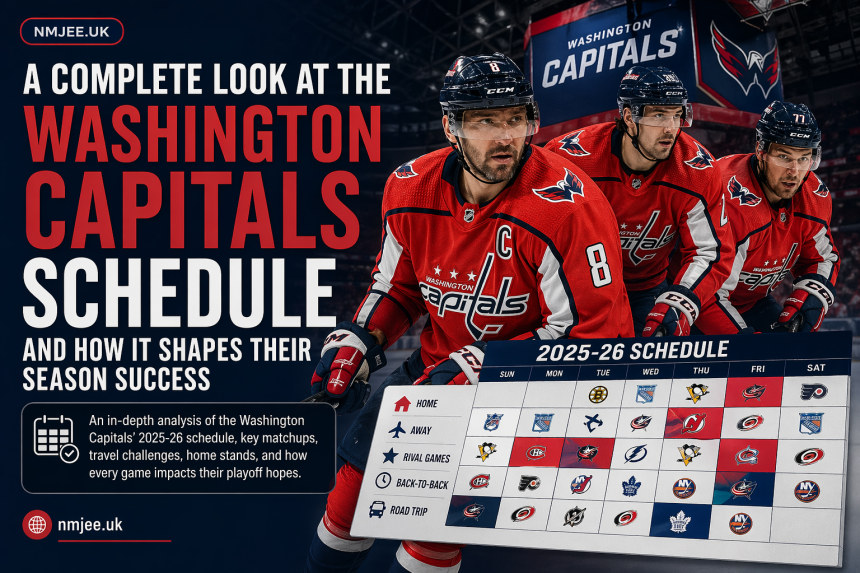
The schedule of an NHL team is far more than just a list of games—it is a blueprint that can influence performance, momentum, and ultimately success across an entire season. For the Washington Capitals, the structure of their 2025–26 campaign provides a fascinating case study in how scheduling dynamics shape outcomes. From long road trips to clustered home stands and crucial late-season stretches, every segment of the calendar plays a role in determining whether a team thrives or struggles.
This article takes a deep, comprehensive look at the Capitals’ schedule and explores how its design impacts their performance, consistency, and playoff ambitions.
Understanding the Structure of an NHL Season
Before diving into specifics, it’s important to understand how the NHL season works. Each team plays 82 games, split evenly between home and away contests. These games are spread across several months, with built-in breaks, travel demands, and divisional rivalries shaping the flow of competition.
For the Capitals, like all teams in the National Hockey League, the schedule is carefully crafted to balance travel, rest, and competitive fairness. However, even with this balance, certain stretches inevitably become more demanding than others.
The Capitals’ Season Opener and Early Momentum
The Capitals began their 2025–26 campaign at home against the Boston Bruins, setting the tone for the season. Opening games are always significant—they offer a psychological boost if won and can energize both players and fans.
Starting at home is often seen as an advantage. The washington capitals schedule perform strongly on home ice, and early success can build confidence that carries into tougher stretches. In fact, their previous season featured one of the best home records in the league, demonstrating how critical early home games can be.
Momentum in the opening weeks is not just about wins; it’s about establishing identity. A strong start can solidify systems, chemistry, and belief—elements that become vital later in the season.
Home Stands: Building Consistency and Confidence
One of the most notable aspects of the Capitals’ schedule is the presence of multiple extended home stands. The team had several stretches of three or more consecutive home games, including three separate four-game home stands.

Home stands provide several advantages:
- Reduced travel fatigue
- Familiar environment
- Strong crowd support
These factors contribute to consistency, allowing players to focus more on performance than logistics. For a team like Washington, which has demonstrated strong offensive production at home, these stretches are crucial for accumulating points.
Additionally, weekend home games—18 in total—offer increased fan engagement and energy. This can translate into improved performance, as players often respond to louder, more enthusiastic crowds.
The Challenge of Road Trips
While home games offer comfort, road trips present the opposite challenge. The Capitals faced several multi-game road stretches, including a demanding six-game road trip in January.
Extended travel impacts players in several ways:
- Fatigue from constant movement
- Time zone adjustments
- Lack of routine
These factors can disrupt performance, especially when games are tightly scheduled. Road trips often test a team’s resilience and depth. Successful teams are those that can maintain structure and discipline despite these challenges.
For Washington, how they perform during these road stretches can often define their season. Strong road records typically correlate with playoff qualification, while poor performances can quickly derail momentum.
Back-to-Back Games and Player Fatigue
Another critical element of the schedule is the presence of back-to-back games. The Capitals had 14 such sets during the season.
Back-to-back games are physically and mentally demanding. Players have limited recovery time, which can lead to:
- Increased fatigue
- Higher risk of injuries
- Reduced performance levels
Teams must rely heavily on depth and goaltending rotation during these stretches. Coaches often adjust lineups strategically to manage workload and maintain competitiveness.
For the Capitals, success in back-to-back situations depends on roster depth and coaching decisions. Managing these games effectively can be the difference between securing crucial points or dropping winnable matches.
Midseason Breaks and Their Impact

The 2025–26 season included a significant 17-day pause for the Winter Olympics.
Breaks like this can have mixed effects:
- Positive: Rest and recovery for injured players
- Negative: Loss of momentum for teams on winning streaks
Timing is everything. If a team enters the break struggling, it can serve as a reset. If they are performing well, the interruption may disrupt rhythm.
For Washington, managing this break effectively is key. Returning with renewed focus and energy can set the tone for the second half of the season.
The Importance of Divisional Matchups
In the NHL, divisional games carry extra weight because they directly impact standings and playoff positioning. The Capitals play numerous games against rivals within their division, making these matchups particularly intense.
These games often feature:
- Higher physicality
- Strategic adjustments
- Increased pressure
Winning divisional games not only boosts standings but also provides psychological advantages over direct competitors. For a team aiming to secure a playoff spot, success in these matchups is essential.
Performance Trends and Schedule Influence
Looking at the Capitals’ results, their season record of 43–30–9 reflects a competitive but inconsistent campaign.
Their performance highlights how scheduling can influence outcomes:
- Strong stretches often align with favorable scheduling
- Slumps frequently occur during demanding travel periods
For example, late-season results show a mix of wins and losses, illustrating how fatigue and pressure can impact performance.
Consistency remains one of the biggest challenges. Teams that navigate difficult stretches effectively tend to separate themselves in the standings.
Late-Season Push and Playoff Implications
The final stretch of the schedule is often the most critical. For the Capitals, games in March and April included several key matchups against playoff contenders.
Late-season games are characterized by:
- Increased intensity
- Playoff-like atmosphere
- Minimal margin for error
Teams must balance urgency with composure. Winning streaks in this phase can secure playoff spots, while losses can eliminate teams from contention.
Despite a strong finish in some games, Washington ultimately finished outside the playoff picture, highlighting how earlier struggles and scheduling challenges can have lasting consequences.
Psychological Impact of the Schedule
Beyond physical demands, the schedule also affects players mentally. Long losing streaks, especially during tough travel periods, can impact confidence.

Conversely, successful home stands or winning streaks can boost morale and create a positive team environment.
Psychological resilience is crucial. Teams that maintain focus and confidence despite setbacks are more likely to succeed over the long term.
Coaching Strategies and Adaptation
Coaches play a vital role in navigating the schedule. They must:
- Rotate players effectively
- Manage ice time
- Adjust tactics based on opponent and fatigue
For the Capitals, strategic decisions during back-to-backs and road trips are particularly important. Effective coaching can mitigate the negative effects of a challenging schedule.
Fan Engagement and Schedule Design
The schedule also impacts fans. Weekend games, holiday matchups, and rivalry games drive engagement and attendance.
The Capitals’ inclusion of games on Halloween and New Year’s Eve adds excitement and tradition.
Fan support can influence performance, especially at home. A strong connection between the team and its fans creates an environment that motivates players.
Lessons from the Capitals’ Season
The Capitals’ 2025–26 season offers several key lessons about scheduling:
- Balance is critical – Teams must perform consistently across all types of stretches.
- Depth matters – Injuries and fatigue require strong bench contributions.
- Momentum is fragile – Breaks and tough stretches can disrupt rhythm.
- Timing is everything – Late-season performance often determines success.
These lessons apply not only to Washington but to all teams in the league.
Conclusion: The Schedule as a Determining Factor
The schedule is one of the most influential factors in an NHL season. For the Washington Capitals, it shaped every aspect of their campaign—from early momentum to late-season pressure.
Home stands provided opportunities for success, while road trips tested resilience. Back-to-back games challenged endurance, and midseason breaks disrupted rhythm. Each element contributed to the overall narrative of the season.
Ultimately, the Capitals’ performance demonstrates that success in hockey is not just about talent—it is about adaptability. Teams that can navigate the complexities of their schedule, maintain consistency, and capitalize on favorable stretches are the ones that achieve lasting success.