







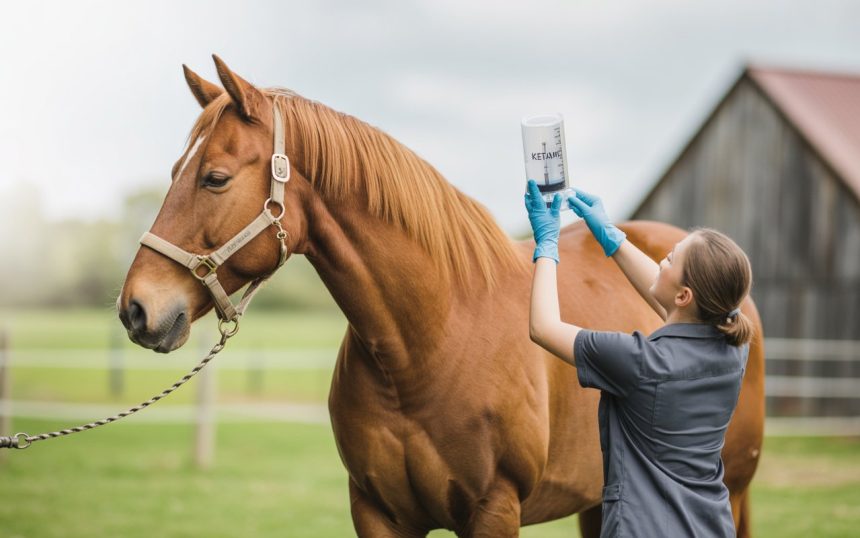
When people hear the word ketamine, many immediately think of veterinarians, barns, and horses being calmed down before surgery. But is that really all there is to it? Is ketamine merely a horse tranquilizer, or does its story go much deeper than that?
The truth is far more nuanced—and fascinating. This article dives deep into ketamine’s history, uses in both veterinary and human medicine, its reputation in society, and the myths that often surround it. By the end, you’ll have a well-rounded understanding of where ketamine stands today.
What Exactly Is Ketamine?
Ketamine is a dissociative anesthetic, meaning it alters perception of sight and sound while creating a sense of detachment from reality. Unlike some drugs that depress breathing, ketamine has the unique ability to sedate without shutting down vital functions like heart rate and respiration.
That’s one of the main reasons it has been so valuable in both medical and veterinary settings—it’s powerful, versatile, and relatively safe when used properly.
The Origins: From Laboratories to Clinics
Ketamine was developed in the 1960s as researchers sought a safer and more effective alternative to traditional anesthetics. Its safety profile and fast-acting nature made it an attractive option. Shortly after, doctors began using it in both surgical and emergency procedures.
Interestingly, ketamine wasn’t designed only for animals. In fact, its first human applications came during the Vietnam War, where it was widely used as a battlefield anesthetic because it worked quickly and didn’t require advanced medical equipment to administer.
Why Do People Associate Ketamine With Horses?
So where does the horse tranquilizer label come from?
The connection stems from ketamine’s common use in veterinary medicine, particularly for large anima ls such as horses. It’s effective because it sedates without causing major drops in blood pressure or breathing, making it practical for managing animals that are otherwise difficult to handle.
Over time, this association stuck. Pop culture and media coverage often oversimplified the narrative, branding ketamine as nothing more than “that horse drug.” But in reality, that description only tells part of the story.
Ketamine in Veterinary Medicine
To this day, ketamine is still a staple in veterinary practices. Vets often combine it with other medications to i nduce anesthesia for animals of various sizes—from cats and dogs to horses and exotic animals.
Think of it as a multi-tool in a vet’s medical kit. It can be used alone for short procedures or paired with other drugs for more complex surgeries. Its reliability is one reason it remains widely trusted in animal care.
Ketamine in Human Medicine
Beyond barns and stables, ketamine has an established role in human healthcare. Doctors use it in surgeries, especially in emergency situations or with patients who might not tolerate other anesthetics well.
It is also employed in pain management. For people suffering from severe burns or chronic pain conditions, ketamine can reduce suffering when other medications fall short.
Most recently, ketamine has made headlines for its potential in mental health treatment—particularly for depression, post-traumatic stress disorder (PTSD), and anxiety disorders. This modern development has helped shift public perception from “horse tranquilizer” to “promising therapy.”
The Role of Ketamine in Mental Health
Over the past two decades, researchers have discovered that ketamine, given at low doses, can provide rapid relief from severe depression—sometimes within hours. This is remarkable compared to traditional antidepressants, which often take weeks to show results.
In clinics worldwide, patients undergo ketamine infusion therapy under strict medical supervision. The results have been life-changing for many who had lost hope with conventional treatments.
This breakthrough illustrates just how much more ketamine is than a simple sedative for animals—it’s a cutting-edge tool in the fight against mental illness.
Myths and Misconceptions
It’s easy to see why ketamine has such a mixed reputation. On one side, it’s a trusted medical tool. On the other, it has been misused recreationally, leading to concerns about abuse.
Here are a few myths worth clearing up:
-
Myth 1: Ketamine is only for horses.
Reality: It’s used extensively in both human and veterinary medicine. -
Myth 2: It’s dangerous in any form.
Reality: When administered by trained professionals, ketamine is remarkably safe. Problems typically arise when it’s used irresponsibly. -
Myth 3: It has no medical value today.
Reality: Ketamine is an FDA-approved drug with growing roles in modern healthcare, especially in mental health.
Recreational Use and Risks
Like many powerful drugs, ketamine has found its way into recreational circles, often under nicknames like “Special K.” At higher doses, it can cause hallucinations, memory gaps, and even a state known as the “K-hole,” where users feel trapped in their own minds.
This non-medical use is risky because dosages aren’t controlled, and combining ketamine with other substances can be dangerous. It’s one reason why the drug’s reputation in the public eye has been complicated.
How Ketamine Works in the Brain
Ketamine primarily acts on the NMDA receptors in the brain, which are linked to mood, pain perception, and memory. By blocking these receptors, ketamine creates a state of dissociation while also triggering new neural connections.
This is why it can help “reset” certain brain patterns in people with depression or PTSD. Think of it like pressing Ctrl+Alt+Delete on a frozen computer—it doesn’t fix everything, but it gives the system a chance to restart.
Comparing Ketamine With Other Anesthetics
Other anesthetics, like propofol or barbiturates, can depress breathing and require advanced monitoring equipment. Ketamine stands out because it keeps breathing and circulation relatively stable.
That’s why it’s often chosen in battlefield medicine, rural hospitals, or veterinary clinics where high-tech equipment might not always be available.
The Legal Status of Ketamine
Globally, ketamine’s legal status varies. In the United States, it’s a Schedule III controlled substance, meaning it has accepted medical uses but also carries the potential for misuse. Other countries regulate it differently—some tightly restrict it, while others allow broader medical use.
Despite these regulations, doctors and researchers continue to explore safe, supervised ways of harnessing its benefits.
The Future of Ketamine
As research advances, ketamine’s reputation is evolving. What was once seen as simply a horse tranquilizer is now being recognized as a groundbreaking tool in psychiatry. New treatments, including ketamine nasal sprays and ongoing studies into long-term effects, are paving the way for wider acceptance.
In many ways, ketamine represents the journey of modern medicine itself: a substance once underestimated, now rediscovered for its full potential.
FAQs
1. Is ketamine still used for horses today?
Yes, veterinarians continue to use ketamine for horses and other animals because of its safety and effectiveness during procedures.
2. Can ketamine really help with depression?
Research shows that ketamine can provide rapid relief for people with treatment-resistant depression, often within hours of administration.
3. Is ketamine safe when prescribed by a doctor?
4. Why is ketamine sometimes called “Special K”?
This is a street name used in recreational settings, referring to its hallucinogenic and dissociative effects.
5. How is ketamine different from other anesthetics?
Unlike many anesthetics, ketamine doesn’t significantly suppress breathing or heart function, making it safer in situations with limited monitoring equipment.
Conclusion
So, is ketamine a horse tranquilizer? Yes—but that’s only part of the picture. It’s also a battlefield anesthetic, a surgical aid, a pain reliever, and a beacon of hope for people battling depression.
Labeling ketamine as merely an animal drug oversimplifies its rich history and life-saving potential. Like a Swiss Army knife in the world of medicine, it has many uses depending on how it’s applied.
By understanding the truth about ketamine, we can move beyond the myths and appreciate its role as a valuable tool in both veterinary and human healthcare.