







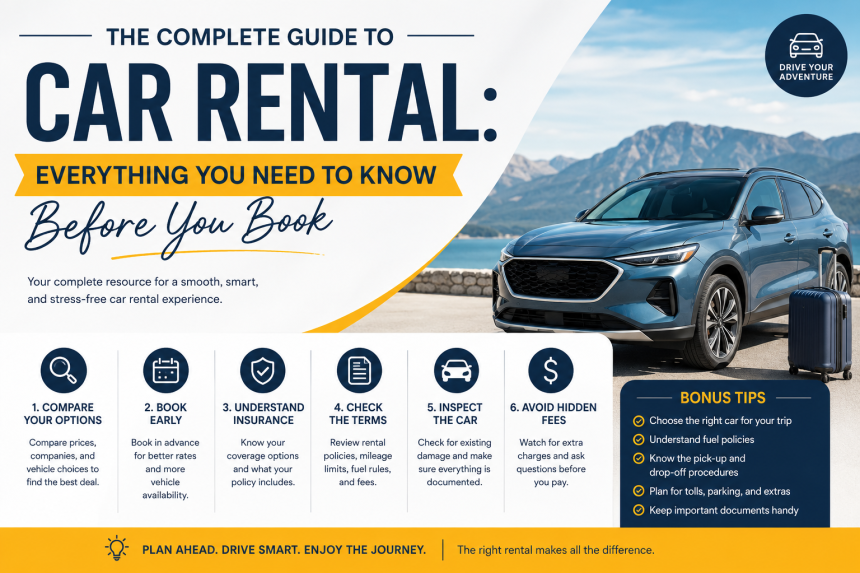
Renting a car can feel confusing if you have never done it before. There are so many companies, so many prices, and so many extra fees that pop up at the counter. But once you understand how car rental works, it becomes one of the easiest and most useful travel tools you can have. Whether you are going on a family vacation, a business trip, or just need a car for a weekend, this guide will walk you through everything step by step in simple, easy-to-understand language.
What Is Car Rental?
Car rental is a service where a company lets you use a vehicle for a short period of time in exchange for payment. Instead of owning a car, you simply “borrow” one from a rental company for a day, a week, or even longer. Once you are done using it, you return the car to the company. This is very different from buying a car because you do not have to worry about long-term costs like maintenance, insurance, or depreciation. You only pay for the time you actually use the vehicle.
Car rental services are available almost everywhere in the world. You can find rental counters at airports, train stations, city centers, and even through mobile apps that deliver the car directly to your location. This makes car rental one of the most flexible ways to travel.
Why Do People Rent Cars?

There are many reasons why people choose to rent a car instead of using other types of transportation. Here are some of the most common reasons:
1. Traveling to a New City or Country When you travel somewhere new, public transportation may not take you everywhere you want to go. Renting a car gives you the freedom to explore at your own pace without waiting for buses or trains.
2. Business Trips Many professionals rent cars when traveling for work. It allows them to attend meetings, visit clients, and manage their schedule without depending on taxis or rideshare services.
3. Special Occasions Weddings, road trips, family reunions, and other special events often require extra vehicles. Renting a car is a simple solution when you need more space or a nicer car for a short time.
4. Vehicle Repairs If your personal car is in the shop for repairs, a rental car can keep your daily life running smoothly while you wait.
5. Trying Before Buying Some people rent a car model they are thinking about purchasing. This lets them test how the car feels on the road before making a big financial decision.
Types of Rental Cars Available
Car rental companies usually offer a wide range of vehicle types to fit different needs and budgets. Here are the most common categories:
- Economy Cars – Small, fuel-efficient vehicles that are perfect for solo travelers or couples on a budget.
- Compact Cars – Slightly larger than economy cars, offering a bit more comfort and space.
- Sedans – Great for small families or business travelers who want comfort and a smooth ride.
- SUVs – Ideal for families, group trips, or anyone needing extra space and higher ground clearance.
- Luxury Cars – For those who want a premium experience with high-end features and comfort.
- Vans and Minivans – Perfect for large groups or families traveling together with lots of luggage.
- Convertibles – A fun option for scenic drives and vacations in warm climates.
Choosing the right type of car depends on your travel needs, budget, and the number of passengers you will have.
How to Rent a Car: Step-by-Step
Renting a car is usually a simple process, especially if you follow these steps:
Step 1: Decide What You Need Think about how many passengers you will have, how much luggage you need to carry, and how long you will need the car. This will help you choose the right vehicle type.
Step 2: Compare Prices Online Before booking, compare prices from different rental companies. Prices can vary a lot depending on the location, season, and demand. Booking in advance often saves you money.
Step 3: Check the Rental Requirements Most companies require a valid driver’s license, a minimum age (usually 21 or 25), and a credit card for payment and deposit purposes. Some countries may also require an International Driving Permit.
Step 4: Read the Rental Agreement Carefully Before signing anything, read the terms and conditions. Pay attention to mileage limits, fuel policies, and insurance coverage.
Step 5: Inspect the Car Before Driving Off Always check the car for scratches, dents, or any damage before you leave the rental lot. Take photos as proof in case there is a dispute later.
Step 6: Return the Car on Time Returning the car late can result in extra charges, so make sure you know the exact drop-off time and location.
Tips to Save Money on Car Rental

Car rental prices can add up quickly if you are not careful. Here are some simple tips to help you save money:
- Book Early – Prices tend to increase closer to the rental date, especially during holidays and peak travel seasons.
- Avoid Airport Rentals When Possible – Airport locations often charge extra fees compared to city locations.
- Choose a Smaller Car – Smaller vehicles are usually cheaper to rent and more fuel-efficient.
- Fill the Tank Yourself – Rental companies often charge high prices for fuel if you return the car with an empty tank. It is usually cheaper to fill it up yourself before returning it.
- Check for Discounts – Memberships, credit card perks, and loyalty programs can offer discounts on car rentals.
- Avoid Unnecessary Add-Ons – Extra items like GPS devices or child seats can often be brought from home instead of rented.
- Compare Insurance Options – Sometimes your personal auto insurance or credit card already covers rental cars, so you might not need to pay extra for the rental company’s insurance.
Common Mistakes to Avoid
Many first-time renters make small mistakes that end up costing them money or causing stress. Here are a few things to watch out for:
- Not Checking the Fuel Policy – Some companies require a full tank return, while others charge a flat fuel fee. Know the difference before you drive away.
- Ignoring Insurance Coverage – Skipping insurance can be risky if an accident happens, but buying unnecessary coverage can waste money. Understand what you already have before adding more.
- Forgetting to Inspect the Car – Skipping this step can lead to being charged for damage you did not cause.
- Not Understanding Mileage Limits – Some rentals have a daily mileage cap, and going over it can result in extra fees.
- Booking the Wrong Car Size – Renting a car that is too small for your luggage or group can cause unnecessary stress during your trip.
The Future of Car Rental
The car rental industry is changing quickly thanks to technology. Many companies now offer mobile apps that let you book, unlock, and even start your rental car directly from your phone, making contactless rentals more common and convenient.
Electric vehicles are also becoming a popular choice in rental fleets, helping travelers save on fuel and reduce their environmental impact as charging stations become more widely available. Car sharing services, where individuals rent out their personal vehicles to others, are growing too, giving renters more variety and often lower prices than traditional companies.
Questions to Ask Before You Book
Before you confirm any car rental reservation, it helps to ask yourself a few important questions. Doing this can save you from surprises later and make sure you pick the best option for your trip.
- What is included in the price? Some listings look cheap at first but do not include taxes, insurance, or extra driver fees. Always check the full total cost before booking.
- Is there a cancellation policy? Plans can change, so it is smart to know if you can cancel or modify your booking without losing money.
- What happens if the car breaks down? Ask the company about their roadside assistance policy in case something goes wrong during your trip.
- Are there extra fees for additional drivers? If more than one person will be driving the car, make sure everyone is listed on the agreement to avoid problems with insurance.
- What documents do I need at pickup? Confirm exactly which documents, such as your license, passport, or credit card, you need to bring so you are not turned away at the counter.
Taking a few minutes to ask these questions before booking can make your entire rental experience much smoother and more predictable.
Final Thoughts
Car rental is a powerful tool that gives you freedom, flexibility, and convenience whether you are traveling for business, pleasure, or simply need a temporary vehicle. By understanding how the process works, comparing prices, reading the rental agreement carefully, and avoiding common mistakes, you can have a smooth and affordable rental experience every time.
Next time you are planning a trip or need a car for a short period, use this guide as your roadmap. With the right preparation, renting a car can be simple, stress-free, and even enjoyable. Safe travels, and enjoy the open road!