






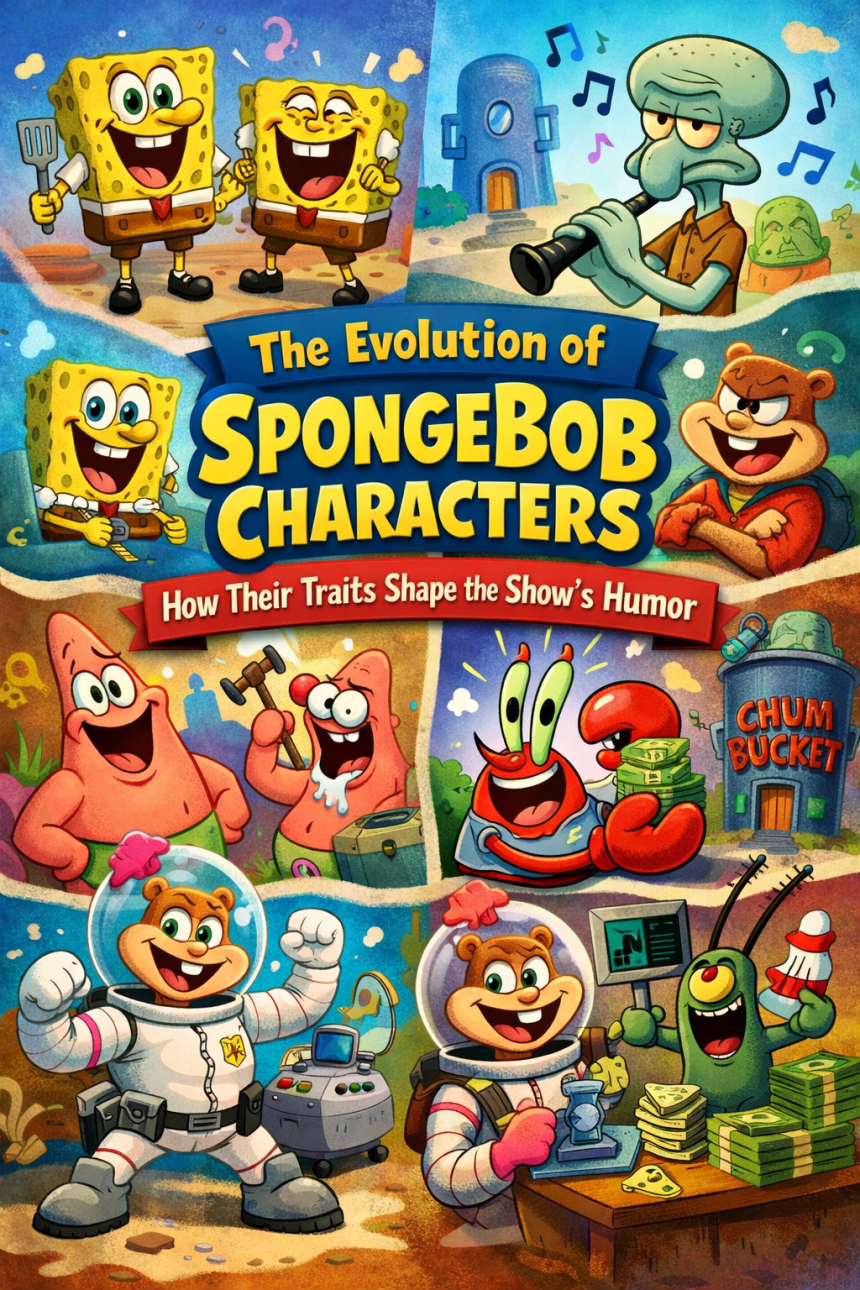
Since its debut in 1999, SpongeBob SquarePants has become one of the most iconic animated series in television history. What initially appeared to be a simple children’s cartoon about a cheerful sea sponge quickly evolved into a multi-generational phenomenon filled with clever writing, layered humor, and surprisingly complex characters. At the heart of its longevity lies the evolution of its main cast. Each character has grown, shifted, and occasionally exaggerated over time, and their distinctive traits have shaped the unique comedic style that defines the show. The humor of SpongeBob SquarePants does not rely solely on jokes or gags; it thrives on personality clashes, character exaggeration, and emotional absurdity. By examining how the characters have evolved and how their defining traits interact, we can better understand why the show continues to resonate with audiences decades later.
SpongeBob SquarePants: The Optimistic Absurdist
SpongeBob himself began as a wide-eyed, endlessly optimistic fry cook who saw joy in even the smallest details of life. In the early seasons, his innocence felt grounded. He was enthusiastic and occasionally naïve, but his actions were often motivated by genuine kindness and a desire to help others. His optimism functioned as a comedic tool, especially when contrasted with the cynicism of those around him. The humor often emerged from his inability to recognize negativity, as he would interpret insults or setbacks as minor inconveniences rather than serious problems.

As the show evolved, SpongeBob’s personality became more exaggerated. His enthusiasm grew louder, his emotional reactions more dramatic, and his naivety sometimes bordered on absurdity. Some critics have argued that this shift made him more chaotic and less grounded. However, this exaggeration also amplified the show’s surreal humor. His over-the-top reactions created a cartoon logic where minor misunderstandings spiraled into elaborate disasters. SpongeBob’s unwavering positivity in the face of absurd chaos became the central engine of the show’s comedy.
What makes SpongeBob such a powerful comedic figure is his emotional sincerity. Even when he behaves foolishly, the audience senses that his intentions are pure. This sincerity allows the humor to remain light rather than mean-spirited. His character embodies the absurdist tradition, where exaggerated optimism collides with a world that often refuses to cooperate. The result is a comedic tension that defines many of the series’ most memorable moments.
Squidward Tentacles: The Reluctant Straight Man
If SpongeBob represents boundless enthusiasm, Squidward serves as his perfect opposite. Introduced as the grumpy, artistically inclined cashier at the Krusty Krab, Squidward’s defining traits are cynicism, arrogance, and deep dissatisfaction. In the early seasons, Squidward functioned as the show’s straight man. His dry wit and sarcastic remarks grounded the absurdity around him. The humor often stemmed from his frustration with SpongeBob’s relentless cheerfulness.
Over time, Squidward’s character gained more emotional depth. Episodes began to explore his insecurities, failed artistic ambitions, and desire for recognition. This added vulnerability made him more relatable. His exaggerated misery became both comedic and sympathetic. The audience laughs at his misfortune, but they also understand his longing for peace and artistic validation.
The dynamic between SpongeBob and Squidward is central to the show’s humor. SpongeBob’s innocence clashes with Squidward’s bitterness, creating a cycle of irritation and chaos. Yet their relationship occasionally reveals moments of genuine connection. These rare instances of warmth prevent the humor from becoming purely antagonistic. Squidward’s evolution into a more complex character allows the comedy to explore themes of ambition, disappointment, and reluctant friendship.
Patrick Star: From Lovable Fool to Agent of Chaos
Patrick Star began as SpongeBob’s loyal best friend and a simple-minded but kind-hearted companion. In early seasons, his stupidity was portrayed as harmless and occasionally insightful in unexpected ways. He often delivered absurd yet strangely philosophical lines that became iconic among fans. His misunderstandings of basic concepts created situational comedy without malice.
As the series progressed, Patrick’s character shifted toward a more exaggerated form of incompetence. His ignorance became more extreme, and he sometimes displayed selfish or even antagonistic behavior. While this evolution changed the tone of his humor, it also intensified the unpredictability of the show. Patrick became an agent of chaos, introducing random and illogical solutions to problems that made situations spiral further out of control.
The humor derived from Patrick lies in unpredictability. His inability to follow logical reasoning disrupts any attempt at normalcy. When paired with SpongeBob’s optimism, the two create a feedback loop of escalating absurdity. Patrick’s evolution reflects the show’s broader embrace of surrealism. While his earlier portrayal leaned on simple slapstick, later iterations relied more on exaggerated absurdity and shock humor.
Mr. Krabs: Greed as Comic Obsession

Mr. Krabs, the money-obsessed owner of the Krusty Krab, represents another crucial element of the show’s humor. From the beginning, his defining trait has been greed. In early episodes, his obsession with money was humorous but balanced with occasional moments of care for SpongeBob. His penny-pinching schemes often backfired, creating comedic irony.
As the show continued, Mr. Krabs’ greed became increasingly exaggerated. He would go to extreme lengths to save or earn even a single penny. This hyperbolic obsession transformed him into a caricature of capitalism. The humor stems from the absurd lengths he is willing to go for profit, even when the stakes are ridiculously low.
Yet Mr. Krabs is not entirely heartless. Episodes occasionally reveal his softer side, particularly in his relationship with his daughter, Pearl. These moments add dimension to his character and prevent him from becoming one-note. His evolution demonstrates how a single exaggerated trait, when explored creatively, can sustain long-term comedic storytelling.
Sandy Cheeks: Intelligence Meets Absurdity
Sandy Cheeks adds another layer to the comedic structure of SpongeBob SquarePants. As a land-dwelling squirrel and scientist living underwater, she introduces an element of absurd realism. Her intelligence, discipline, and physical strength contrast sharply with SpongeBob and Patrick’s impulsiveness.
In early seasons, Sandy often played the role of mentor or voice of reason. Her scientific approach provided a counterbalance to the show’s silliness. However, she also participated in the absurdity, engaging in karate matches or ambitious experiments that inevitably went wrong. Over time, her inventions and experiments became increasingly exaggerated, contributing to the show’s more surreal episodes.
Sandy’s character demonstrates that intelligence itself can be a source of humor. Her confidence in science often collides with the illogical nature of Bikini Bottom. The contrast between rational experimentation and cartoon physics produces comedic tension. Her evolution shows how the show blends intellect and nonsense without undermining either.
Plankton: The Theatrical Villain
Plankton, the diminutive owner of the failing Chum Bucket, embodies theatrical villainy. His singular goal of stealing the Krabby Patty secret formula provides ongoing narrative conflict. In early episodes, his schemes were elaborate yet comically doomed to fail. His overconfidence contrasted with his small size, creating visual and situational humor.
Over time, Plankton’s character expanded to include his relationship with his computer wife, Karen. Their dynamic adds a layer of domestic comedy to his villainous ambitions. Karen’s sarcasm and intelligence often overshadow Plankton’s grandiose plans, creating humor through role reversal.
Plankton’s evolution highlights how repetition can become a strength in comedy. His constant failure becomes expected, yet the creativity of each new plan keeps the joke fresh. The audience anticipates his defeat, but the journey toward that inevitable outcome remains entertaining.
The Power of Character Contrast
The humor of SpongeBob SquarePants relies heavily on contrast. SpongeBob’s optimism clashes with Squidward’s cynicism. Patrick’s stupidity disrupts Sandy’s intelligence. Mr. Krabs’ greed conflicts with Plankton’s ambition. These opposing traits create a network of comedic tension that sustains the series.
As the characters evolved, their defining traits became more exaggerated. This exaggeration intensified the contrasts, pushing situations into surreal territory. The show gradually embraced absurdism, visual gags, and rapid-fire humor, but it always returned to character-driven comedy. No matter how bizarre the scenario, the reactions of the characters remained consistent with their established personalities.
Emotional Depth Beneath the Absurdity
Despite its reputation for silliness, SpongeBob SquarePants often explores deeper emotional themes. Squidward’s insecurity, Mr. Krabs’ attachment to his daughter, and even Plankton’s loneliness add emotional texture to the humor. These elements prevent the show from becoming purely chaotic.
The evolution of the characters allowed for more nuanced storytelling. Episodes began to explore individual backstories and vulnerabilities. This depth enhances the humor by making it more meaningful. When audiences understand a character’s motivations, even exaggerated behavior feels grounded.
Why the Evolution Matters

Long-running shows risk stagnation if characters remain static. The evolution of the SpongeBob cast has allowed the series to experiment with different comedic styles while maintaining its core identity. The early seasons leaned more heavily on situational humor and subtle wit. Later seasons embraced surrealism and faster pacing. Throughout these shifts, the characters’ traits served as the foundation.
The exaggeration of personalities reflects the broader evolution of animated comedy. As audiences grew more accustomed to the show’s tone, the writers pushed boundaries further. Yet the essence of each character remained recognizable. SpongeBob is still optimistic. Squidward is still cynical. Patrick is still foolish. Their traits may have intensified, but they have not fundamentally changed.
Conclusion: Character as the Heart of Humor
The enduring success of SpongeBob SquarePants lies not merely in its colorful animation or catchy theme song, but in the evolution of its characters. Each figure in Bikini Bottom represents a carefully crafted set of traits that generate humor through contrast, exaggeration, and emotional sincerity. As these characters have grown and shifted over time, they have shaped the comedic identity of the show.
SpongeBob’s optimism anchors the absurdity. Squidward’s cynicism grounds it. Patrick’s unpredictability destabilizes it. Mr. Krabs’ greed fuels conflict. Sandy’s intelligence challenges logic. Plankton’s ambition sustains rivalry. Together, they form a dynamic ecosystem of humor that continues to entertain audiences across generations.
Ultimately, the evolution of these characters demonstrates that great comedy is rooted in personality. Jokes may fade, and animation styles may change, but well-developed characters remain timeless. In Bikini Bottom, it is not just the undersea setting that keeps viewers coming back—it is the vibrant personalities whose traits, conflicts, and growth shape the show’s unforgettable humor.