






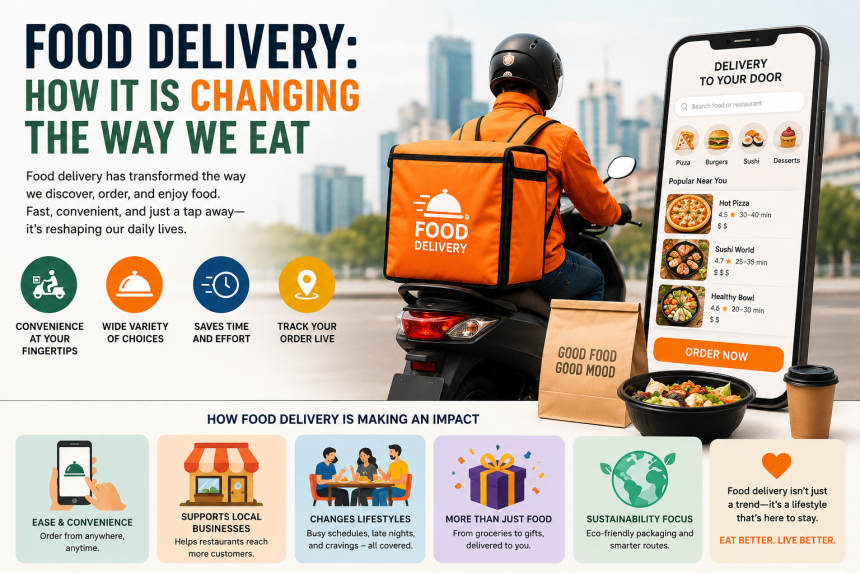
Food delivery has become a normal part of daily life for millions of people around the world. Just a few years ago, ordering food online was seen as a small luxury. Today, it is a habit. People use food delivery apps for breakfast, lunch, dinner, and even late-night snacks. This simple idea — bringing food from a restaurant straight to your door — has grown into a huge global industry worth billions of dollars.
In this article, we will look at why food delivery has become so popular, how it works, its benefits and challenges, and what the future may hold for this fast-growing business.
What Is Food Delivery?
Food delivery is a service that allows people to order food from restaurants or cloud kitchens and have it delivered to their home, office, or any other location. Customers usually place their order through a mobile app or website. The restaurant prepares the food, and a delivery person picks it up and brings it to the customer.
There are two main types of food delivery services:
- Restaurant-owned delivery – Some restaurants have their own delivery staff and deliver food directly to customers without using a third-party app.
- Third-party delivery platforms – Companies that connect customers with many different restaurants through one app. These platforms handle the ordering, payment, and delivery process.
Both types have grown rapidly, but third-party platforms have changed the industry the most because they give customers access to hundreds of restaurants in one place.
Why Food Delivery Has Become So Popular
There are several reasons why food delivery has grown so fast in recent years.
1. Convenience
The biggest reason people use food delivery is convenience. After a long day at work, many people do not want to cook or go out. With just a few taps on a phone, they can order their favorite meal and have it delivered within minutes. This ease of use is one of the strongest reasons for the industry’s growth.
2. Wide Variety of Choices
Food delivery apps give users access to many different types of cuisine. Instead of visiting one restaurant, customers can browse dozens of options — Italian, Chinese, Indian, fast food, healthy meals, desserts, and more. This variety keeps customers interested and coming back for different cravings.
3. Time-Saving
Many people today have busy schedules. Between work, family, and other responsibilities, cooking every meal is not always possible. Food delivery saves time by removing the need to shop for groceries, cook, and clean up afterward.
4. Technology and Smartphones
The rise of smartphones and fast internet has made food delivery apps easy to use. GPS tracking allows customers to see exactly where their order is, and secure payment systems make online transactions simple and safe. Without this technology, the food delivery industry would not have grown as quickly as it has.
5. The Impact of the Pandemic
The COVID-19 pandemic played a major role in pushing more people toward food delivery. With restaurants closed for dine-in service and people staying home, delivery became one of the only ways to enjoy restaurant food. Many people who had never used delivery apps before started using them regularly, and the habit continued even after restrictions were lifted.
How Food Delivery Works

Understanding the basic process behind food delivery can help explain why it works so smoothly.
- Browsing and Ordering – The customer opens an app, browses restaurants, and selects the food they want.
- Payment – The customer pays online through a card, digital wallet, or cash on delivery, depending on what is available.
- Order Confirmation – The restaurant receives the order and starts preparing the food.
- Delivery Assignment – A delivery driver, often called a “delivery partner” or “rider,” is assigned to pick up the order.
- Pickup and Delivery – The driver collects the food from the restaurant and delivers it to the customer’s address.
- Tracking – Throughout this process, the customer can track their order in real time using the app’s map feature.
This entire process usually takes between twenty and forty-five minutes, depending on the distance and how busy the restaurant is.
Benefits of Food Delivery
Food delivery offers benefits not just to customers, but also to restaurants and delivery workers.
For Customers
- Convenience and comfort – Food can be enjoyed without leaving home.
- More choices – Access to a wide range of restaurants and cuisines.
- Time savings – No need to cook, shop, or clean.
- Special deals – Many apps offer discounts, coupons, and loyalty rewards.
For Restaurants
- Increased sales – Restaurants can reach more customers beyond those who visit in person.
- Lower overhead – Some restaurants use cloud kitchens, which do not need a dine-in space, reducing costs.
- Wider reach – Small restaurants can compete with larger chains by being visible on popular delivery apps.
For Delivery Workers
- Flexible work – Many delivery jobs allow people to choose their own hours.
- Extra income – Delivery work is often used as a side job to earn additional money.
Challenges Facing the Food Delivery Industry
While food delivery has many benefits, it also faces some serious challenges.
1. High Commission Fees
Many restaurants complain that delivery platforms charge high commission fees, sometimes between fifteen and thirty percent of each order. This can make it hard for small restaurants to make a profit, even when their sales increase.
2. Food Quality and Packaging
Food does not always arrive in the same condition as it would if eaten fresh at the restaurant. Some dishes lose their taste or texture during delivery, and poor packaging can lead to spills or cold food.
3. Delivery Worker Conditions
Delivery drivers often work long hours in difficult weather conditions for relatively low pay. Many delivery workers are not full-time employees, which means they may not receive benefits like health insurance or paid leave. This has become a major topic of discussion around fair treatment of workers in the gig economy.
4. Environmental Impact
The rise of food delivery has led to an increase in packaging waste, including plastic containers, bags, and disposable cutlery. This has raised concerns about the environmental impact of the industry, pushing some companies to look for more sustainable packaging options.
5. Traffic and Safety
With more delivery drivers on the road, especially those using bikes or scooters, there are growing concerns about road safety and traffic congestion in busy cities.
The Future of Food Delivery

The food delivery industry is expected to keep growing in the coming years. Several trends are shaping its future.
Drone and Robot Delivery
Some companies are testing drone delivery and delivery robots to make the process faster and reduce dependence on human drivers. While still in early stages, this technology could change how food is delivered in the future.
Focus on Sustainability
As environmental concerns grow, more companies are switching to eco-friendly packaging and exploring ways to reduce food waste and carbon emissions from delivery vehicles.
Artificial Intelligence
AI is being used to predict what customers want to order, suggest personalized meals, and improve delivery times by choosing the fastest routes.
Growth of Cloud Kitchens
Cloud kitchens, also known as ghost kitchens, are restaurants that only prepare food for delivery and do not have a dine-in space. This model is becoming more popular because it reduces costs and allows businesses to focus purely on delivery orders.
Subscription Models
Many delivery platforms now offer subscription plans that give customers free or discounted delivery for a monthly fee. This encourages customer loyalty and increases the number of regular users.
Expansion into Groceries and Everyday Essentials
Food delivery companies are no longer limiting themselves to restaurant meals. Many now deliver groceries, medicines, and household essentials within minutes. This shift shows that the delivery model built for food is being applied to almost every part of daily shopping, making these apps a bigger part of everyday life than ever before.
Tips for Choosing the Right Food Delivery App
With so many options available, it helps to compare a few things before ordering.
- Compare delivery fees – Fees vary a lot between apps.
- Check delivery times – Some apps are faster depending on your location.
- Read reviews – Reviews of the restaurant and the app can help avoid a bad experience.
- Look for deals – Many apps run regular discounts worth checking first.
- Consider the restaurant’s rating – A high rating usually means better quality and service.
Conclusion
Food delivery has completely changed the way people eat, offering convenience, variety, and comfort that were not possible before. It has created new opportunities for restaurants, delivery workers, and technology companies, while also bringing challenges that need to be addressed, such as fair pay for workers, food quality, and environmental impact.
As technology continues to advance, food delivery is likely to become even faster, smarter, and more sustainable. Whether it is through drone delivery, AI-powered recommendations, or eco-friendly packaging, the industry will keep evolving to meet the needs of busy customers around the world.
For now, one thing is clear: food delivery is not just a trend — it has become a permanent part of modern life, and it is changing the way the world eats, one order at a time.