







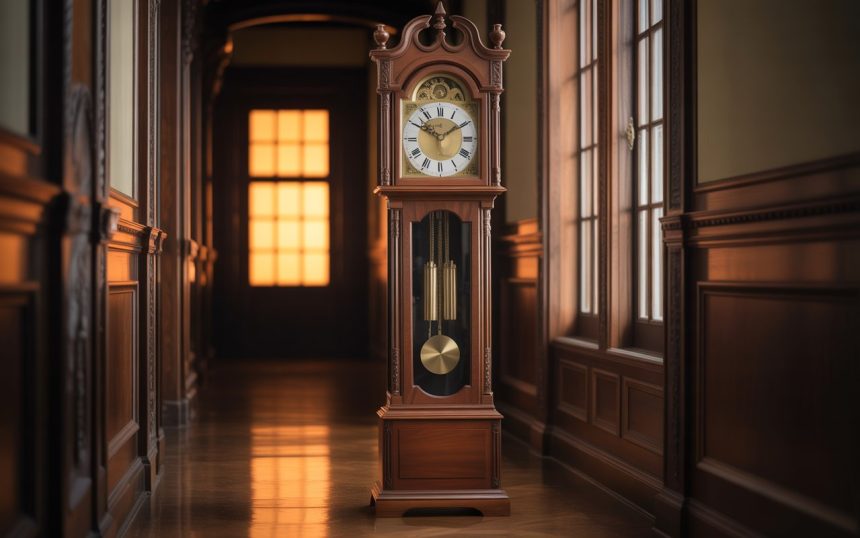
There’s something deeply comforting about the steady tick of a tall, elegant clock standing quietly in a room. Maybe you’ve seen one in your grandparents’ house, in an old movie, or even in a museum. But have you ever stopped to wonder what makes a grandfather clock so special? Why has it remained relevant in a fast-paced digital world where time is just a glance away on your phone?
This article takes you on a journey through the fascinating world of grandfather clocks—exploring their history, craftsmanship, cultural importance, and practical care. Whether you’re a curious reader or someone thinking about owning one, you’ll find everything you need right here.
What Is a Grandfather Clock?
A grandfather clock is a tall, freestanding clock, typically housed in a wooden case and powered by a pendulum. It usually stands between 6 to 8 feet tall and features a long case that encloses its inner workings.
But it’s more than just a timekeeper—it’s a piece of art, history, and tradition combined. Think of it like a storyteller standing in the corner of your room, quietly marking the passage of time.
The Origin and History of Grandfather Clocks
The story begins in the late 17th century when pendulum clocks were first developed. The invention of the pendulum mechanism allowed clocks to become far more accurate than earlier designs.
The tall-case design became popular in England around the 1680s. These clocks were initially known as “longcase clocks.” The name “grandfather clock” came later, inspired by a popular song in the 1800s about a clock that stopped when its owner died.
Over time, these clocks spread across Europe and America, becoming a symbol of elegance and status.
How a Grandfather Clock Works
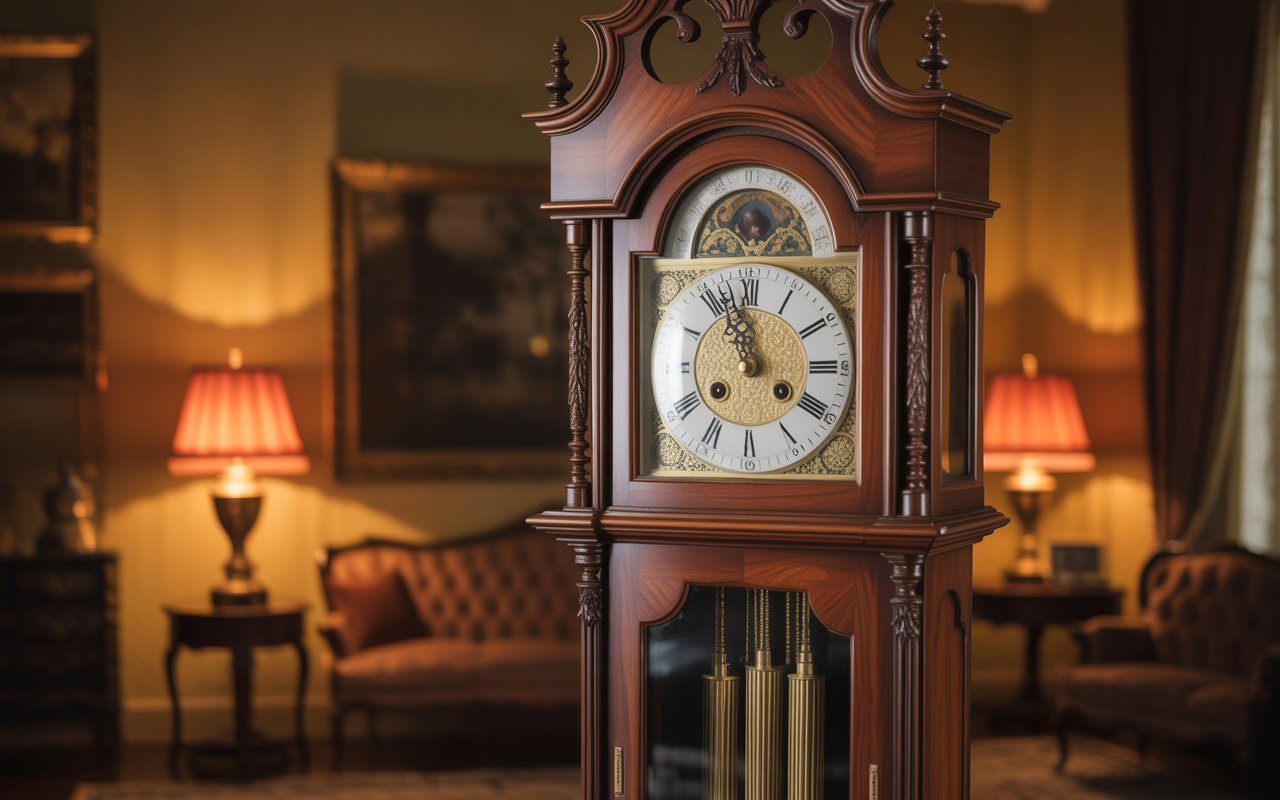
At first glance, a grandfather clock may seem complex, but its basic operation is surprisingly simple.
The Pendulum
The pendulum swings back and forth, regulating the movement of time. Each swing is like a heartbeat, steady and reliable.
The Weights
Most grandfather clocks use weights that slowly descend over time, powering the clock mechanism.
The Escapement Mechanism
This part controls the release of energy from the weights, ensuring the clock ticks at a consistent pace.
The Dial and Hands
This is the visible face where time is displayed, often beautifully designed with intricate details.
Imagine the whole system like a carefully choreographed dance—each part moving in harmony to keep perfect time.
Types of Grandfather Clocks
Not all grandfather clocks are the same. They come in various styles and sizes, each with unique features.
Traditional Longcase Clocks
These are the classic designs with ornate wooden cases and brass dials.
Modern Grandfather Clocks
Sleeker and simpler, these fit well in contemporary homes.
Floor Clocks
A broader category that includes grandfather clocks but also slightly shorter versions.
Curio Clock Cabinets
These combine a clock with a display cabinet, allowing you to showcase collectibles.
Each type offers a different personality, much like furniture that reflects your taste.
Materials and Craftsmanship
One of the most appealing aspects of a grandfather clock is its craftsmanship.
Wood Selection
High-quality woods like oak, walnut, and mahogany are commonly used.
Hand-Carved Details
Many clocks feature intricate carvings, adding character and uniqueness.
Metal Components
Brass and steel are used for internal mechanisms and decorative elements.
These clocks are often handmade or carefully assembled, making each piece unique. Owning one is like owning a small piece of history.
Why Grandfather Clocks Are Still Popular
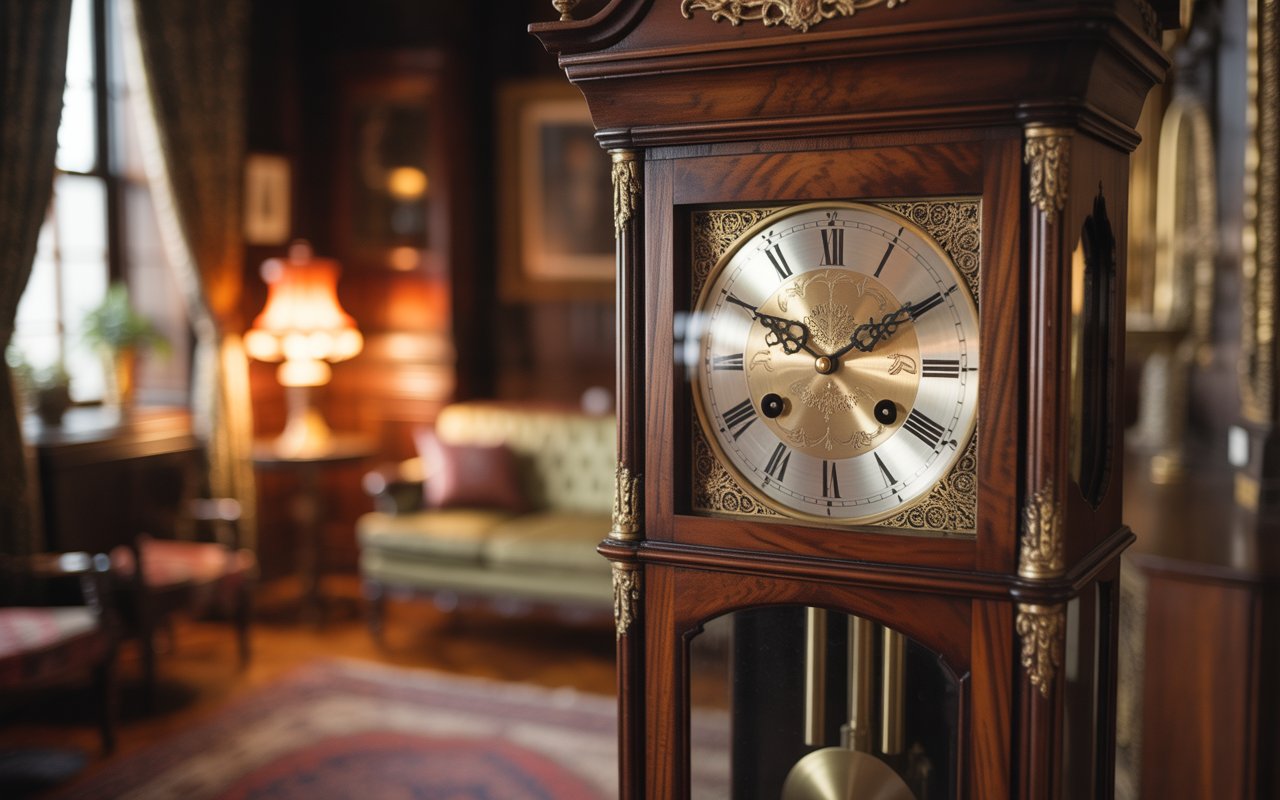
You might wonder—why would anyone choose such a large, traditional clock today?
Timeless Aesthetic
They add elegance and sophistication to any room.
Emotional Value
Many are passed down through generations, carrying family memories.
Statement Piece
A grandfather clock instantly becomes the focal point of a space.
Connection to the Past
In a world of digital screens, it offers a refreshing sense of tradition.
It’s not just about telling time—it’s about experiencing it.
Choosing the Right Grandfather Clock
Thinking of getting one?
Space and Placement
Do you have enough room for a tall clock?
Style Preference
Do you prefer traditional or modern designs?
Budget
Prices can vary widely depending on craftsmanship and materials.
Chime Options
Some clocks play melodies on the hour—do you want that feature?
Choosing the right clock is like choosing a piece of furniture that reflects your personality.
Setting Up Your Grandfather Clock
Setting up a grandfather clock requires a bit of patience but isn’t difficult.
Leveling the Clock
Ensure it stands perfectly straight for accurate timekeeping.
Installing the Pendulum
Attach it carefully to allow smooth movement.
Adjusting the Time
Set the hands gently, usually moving them clockwise.
Winding the Clock
If it’s weight-driven, you’ll need to wind it regularly.
Take your time—this process is part of the charm.
Maintenance and Care Tips
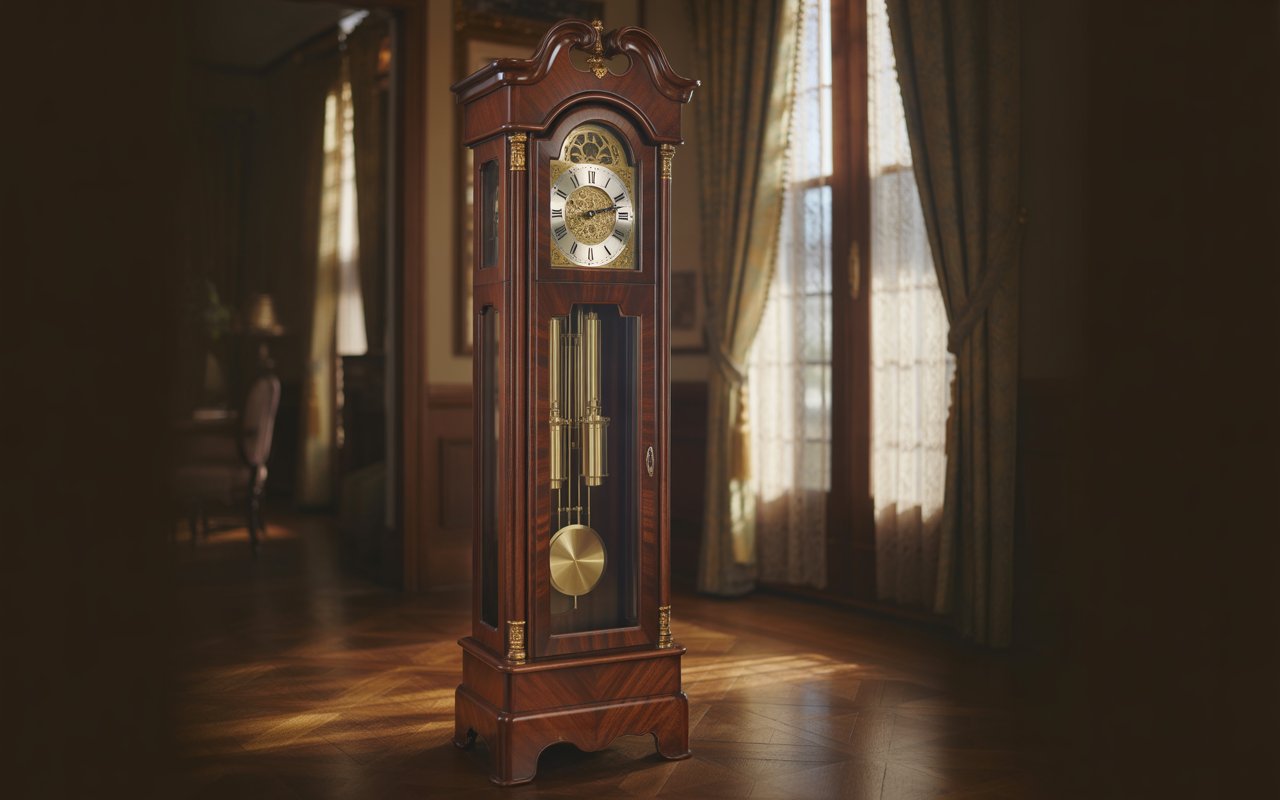
Like any valuable item, a grandfather clock needs proper care.
Regular Cleaning
Dust the exterior and clean the glass panels.
Lubrication
Internal mechanisms may need oiling every few years.
Avoid Direct Sunlight
This prevents fading and damage to the wood.
Professional Servicing
Consider expert maintenance every 3–5 years.
Think of it like caring for a vintage car—it runs best with regular attention.
Common Problems and How to Fix Them
Even the best clocks can face issues.
Clock Stops Working
Check if it’s level or if the weights need winding.
Incorrect Timekeeping
Adjust the pendulum length slightly.
Chime Issues
Ensure the chime selector is properly set.
Most problems are minor and easy to fix with a little patience.
Grandfather Clocks in Culture and Media
These clocks have appeared in countless films, books, and stories.
They often symbolize:
- The passage of time
- Family heritage
- Mystery or suspense
Remember those scenes where a clock chimes in a quiet house? That sound adds depth and emotion to storytelling.
Are Grandfather Clocks a Good Investment?
While not all clocks increase in value, many antique pieces do.
Factors That Affect Value
- Age
- Condition
- Maker
- Materials
Even if it doesn’t become highly valuable, its emotional worth can be priceless.
The Emotional Connection: More Than Just Time
Let’s be honest—time is something we all feel but rarely think about deeply.
A grandfather clock changes that.
It slows things down. It reminds you that every second matters. It becomes part of your daily life—the ticking in the background, the chime at the hour.
It’s like having a quiet companion that never leaves your side.
FAQs
1. How often should a grandfather clock be wound?
Most clocks need winding once a week, but it depends on the model. Always follow the manufacturer’s instructions.
2. Why does my grandfather clock stop suddenly?
It could be due to uneven placement, tangled chains, or a pendulum that isn’t swinging properly.
3. Can I move a grandfather clock easily?
Yes, but it should be done carefully. Remove the pendulum and weights before moving to avoid damage.
4. Do grandfather clocks require professional servicing?
Yes, it’s recommended every 3–5 years to keep the mechanism in good condition.
5. Are grandfather clocks suitable for modern homes?
Absolutely. Many modern designs blend well with contemporary interiors while still offering classic charm.
Conclusion
A grandfather clock is far more than a decorative item or a tool for telling time. It’s a blend of history, craftsmanship, and emotional connection. In a world dominated by fast technology, it stands as a symbol of patience, tradition, and timeless beauty.
Whether you’re drawn to its elegance, its story, or its soothing rhythm, one thing is certain—it leaves a lasting impression.
So, the next time you hear that steady tick or a soft chime, take a moment. Time isn’t just passing—it’s being experienced.