



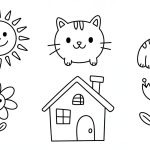
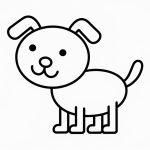



Have you ever picked up a pencil, stared at a blank page, and thought, “I want to draw something cool… but my mind is empty”? You’re not alone. Drawing can feel intimidating, especially when you think it has to be perfect or realistic. The truth is, drawing is less like solving a math problem and more like taking a walk—you just start moving, and the path reveals itself.
This guide is all about cool easy drawing ideas that anyone can enjoy, whether you’re a complete beginner, a casual doodler, or someone rediscovering art after years away. We’ll explore simple concepts, creative prompts, and fun approaches that make drawing feel playful instead of stressful. Think of it as opening a box of crayons—you don’t need a plan, just curiosity.
Why Simple Drawing Ideas Matter More Than You Think
Let’s start with a small mindset shift. Easy drawings aren’t “lesser” drawings. In fact, simple ideas are often the foundation of great art.
When you focus on uncomplicated subjects, your hand relaxes and your imagination wakes up. You stop worrying about mistakes and start enjoying the process. It’s like learning to cook—you don’t begin with a five-course meal; you start with toast.
Simple drawings:
-
Build confidence
-
Improve hand-eye coordination
-
Encourage creativity without pressure
-
Make drawing a habit, not a chore
And honestly, some of the coolest art comes from the simplest lines.
Getting Started: Tools You Actually Need (Hint: Not Many)
Before ideas come tools. But here’s the good news—you don’t need fancy supplies.
Basic tools that work perfectly:
-
A pencil or pen
-
Any paper (notebooks, sticky notes, even receipts)
-
An eraser (optional, not mandatory)
That’s it. Drawing is about ideas and expression, not expensive materials. If art supplies were ingredients, these would be bread, butter, and salt—simple but effective.
Easy Doodles That Still Look Cool

Doodling is where many people accidentally discover their love for drawing. It’s relaxed, unplanned, and surprisingly expressive.
Popular doodle ideas include:
-
Swirls, waves, and loops
-
Repeating shapes like squares or triangles
-
Faces made from just a few lines
-
Random patterns filling empty space
The beauty of doodles is that they don’t demand realism. They live in the moment. One line leads to another, and suddenly you’ve created something uniquely yours.
Cute and Simple Character Drawing Ideas
Characters don’t need detailed anatomy or perfect proportions to be charming. In fact, simpler characters often feel more expressive and memorable.
Try drawing:
-
Stick figures with exaggerated emotions
-
Chibi-style people with big heads and tiny bodies
-
Simple animals with round shapes
-
Cartoon faces showing different moods
Focus on emotion, not perfection. A circle with two dots can feel happier than a detailed portrait if the feeling is right.
Nature-Inspired Drawings Anyone Can Try
Nature is full of shapes that are forgiving and fun to draw. You don’t have to capture every detail—just the essence.
Easy nature ideas:
-
Leaves with visible veins
-
Mountains made of triangles
-
Clouds using soft, curved lines
-
Flowers built from circles and petals
Nature drawings are like background music—calming, familiar, and endlessly flexible. No two leaves look the same, so there’s no such thing as “wrong.”
Everyday Objects Turned Into Art

Sometimes the best ideas are right in front of you. Ordinary objects can become interesting subjects when you see them differently.
Try sketching:
-
A coffee mug with steam lines
-
Shoes from a side view
-
A key, spoon, or pair of glasses
-
A book lying open
These objects already have clear shapes, making them perfect practice. Drawing them is like learning to dance with a partner who already knows the steps.
Minimalist Drawing Ideas for Clean and Modern Art
Minimalism is proof that less can truly be more. A few lines can say a lot.
Minimalist ideas include:
-
Line-art faces drawn without lifting the pen
-
Simple landscapes with one horizon line
-
Single-line animals or plants
-
Abstract shapes with balanced spacing
This style teaches control and confidence. Every line matters, so you become more intentional with your movements.
Fun Pattern and Design-Based Drawings
If you enjoy repetition and rhythm, patterns are incredibly satisfying.
Ideas to explore:
-
Geometric grids
-
Mandala-style designs
-
Checkerboards with twists
-
Repeating symbols or icons
Patterns are like visual music. Once you find the beat, your hand follows naturally. They’re also perfect for relaxing after a long day.
Creative Drawing Prompts When You Feel Stuck

We all hit creative blocks. That’s where prompts come in—they give your brain a starting push.
Simple prompts to spark ideas:
-
Draw your favorite snack as a character
-
Combine two animals into one
-
Sketch a place from a dream
-
Draw an object with a face and personality
Prompts remove the pressure of “what should I draw?” and replace it with playful curiosity.
Drawing From Imagination Without Overthinking
Many people believe imagination is a talent you’re born with. It’s not—it’s a muscle.
To draw from imagination:
-
Start with basic shapes
-
Add details slowly
-
Let ideas evolve naturally
-
Don’t erase too quickly
Think of imagination like clay. You don’t see the final sculpture immediately—you shape it bit by bit.
How Drawing Regularly Improves Creativity
Consistency beats talent every time. Drawing a little each day—even five minutes—can change how you think.
Benefits of regular drawing:
-
Better observation skills
-
Stronger creative confidence
-
Improved problem-solving
-
Reduced stress
Over time, drawing becomes less about results and more about expression. It turns into a quiet conversation between your hand and your mind.
Making Drawing a Relaxing Daily Habit
The secret to sticking with drawing is removing pressure.
Tips to make it enjoyable:
-
Keep a small sketchbook nearby
-
Draw while listening to music
-
Set a timer instead of a goal
-
Accept imperfections
Drawing shouldn’t feel like homework. It should feel like stretching after a long day—gentle, refreshing, and just for you.
Common Mistakes Beginners Make (and How to Avoid Them)
Let’s be honest—most beginners quit too soon. Not because they lack skill, but because of unrealistic expectations.
Common mistakes include:
-
Comparing your work to others
-
Expecting instant improvement
-
Erasing too much
-
Avoiding simple ideas
Remember, every artist you admire once drew shaky lines too. Growth happens quietly, in pages no one else sees.
Frequently Asked Questions (FAQs)
1. Do I need natural talent to start drawing?
No, drawing is a skill that improves with practice, not a talent you must be born with.
2. How long should I draw each day to improve?
Even 5–10 minutes daily can make a noticeable difference over time.
3. What should I draw when I have no ideas?
Start with simple objects around you or use creative prompts to spark inspiration.
4. Is digital drawing easier than traditional drawing?
Both have their advantages, but beginners often find traditional drawing simpler to start with.
5. How do I stop feeling frustrated with my drawings?
Focus on progress, not perfection, and treat drawing as a relaxing activity rather than a test.
Conclusion: Start Simple, Draw Happy
Drawing doesn’t need rules, permission, or perfection. It starts with one line and a willingness to try. Cool and easy drawing ideas are not shortcuts—they’re invitations. Invitations to explore, relax, and express yourself without fear.
So grab a pencil. Draw something small. Then draw something silly. Let your lines wander. Art isn’t about proving anything—it’s about enjoying the journey. And trust me, that blank page? It’s not judging you. It’s waiting for you.